Introduction
They express, without speech. They attract touch, without feeling. They provide experience, without movement. Walls are one of the largest elements of an interior.
While some protective wall products offer pattern, they’re in the form of rigid plastic. And others offer the look of wallcovering with some protection characteristics, but lack the ultra-durable performance of rigid plastics.
Until now, this conundrum left architects and interiors designers in limbo, especially since certain spaces do not lend themselves to the aesthetic of rigid wall cladding.
However, a brand new class of materials called Flexible Wall Protection is showing great potential to be a true game changer by combining the look of wallcovering with the durability of rigid wall protection, so walls can make an impact while being able to take the impact.
This isn’t “just another VWC”

Ricochet™ Flexible Wall Protection Clarity Pattern (left foreground)
Ricochet® Flexible Wall Protection is the perfect balance – the aesthetic of wallcovering with the function of traditional wall protection.
What sets Ricochet apart from standard Vinyl Wall Covering (VWC), is that it offers the same durability and protective performance as traditional rigid wall protection, but is indistinguishable from wallcovering.
It’s durable enough to handle the conditions of the harshest environments, yet literally flexible enough to become the showpiece or the backdrop of any interior. With seamless installation, Ricochet becomes an uninterrupted finish.
In addition, Ricochet fends off stains and vandalism, simply by wiping away with standard cleaning agents. The amount of effort needed to remove the stain or mark will vary based on texture.
To say or think Ricochet is “just another VWC” truly misses the mark – there’s a deliberate reason it’s called: Flexible Wall Protection.
And speaking of cleaning agents …
When tested for use with the EPA’s approved list of SARS-CoV-2 (the virus that causes Coronavirus) disinfectants, Ricochet showed no visual change following exposure to the cleaning agents listed here:
- Bleach (undiluted)
- Virex®
- Isopropyl Alcohol
- Fantastik®
- Lysol®
- Hydrogen Peroxide
Beautifully strong, and vice versa
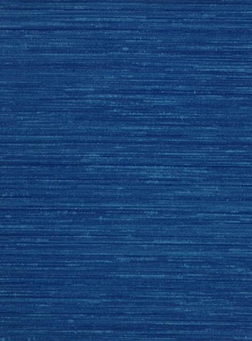
Ricochet Strata pattern in Blissful Blue
In addition, Ricochet is different than traditional wall covering because it incorporates intentional texture, not some sort of printing sleight of hand to give the look of texture, but actual texture in the product. For example, at right is an image of Ricochet in the Strata pattern.
Ricochet comes in 13 patterns and over 200 pattern/color combinations. The product is designed to be indistinguishable from contract wallcovering, and with proper professional installation can create a totally seamless appearance.
Damage in high-traffic spaces
Walls in places like hotels, hospitals and commercial buildings receive some kind of ongoing wear and tear, whether it be from equipment, carts, pedestrian traffic, baggage, etc. When you think of wall damage, almost always what pops in your head is: Hard-edge impact ̶ that is, impact that ruins the drywall from deep cuts and gouges, to absolutely crushing damage (hand-sized or larger craters).
There’s a more-subtle form of damage, however, that often accumulates slowly, but eventually leads to a shoddy appearance – we’re talking about scuffs and abrasions. Think of a heavily loaded suitcase rubbing along a hotel corridor wall – not enough to “hammer” the drywall, but enough contact to leave marks, scuffs and rubs. This happens dozens if not hundreds of times a month, so much so that in short order, the walls start looking bad.
Real World Installation: Medical Center
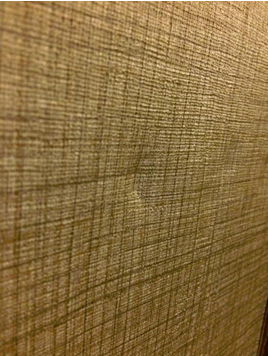
As part of the research and development for Ricochet® Flexible Wall Protection, the product was installed in several high-traffic facilities with high damage potential, including a major medical center in New Jersey. Within a fairly short amount of time a corridor with a lot of cart and equipment traffic took several hits.
The following picture shows a close-up of the damage, and here’s what the hospital facility manager noted about Ricochet:
- The pattern masked the damage to the drywall
- Took the urgency out of the repair
- Remained intact
- Contained drywall (gypsum) dust
We didn’t at first understand his last point, but then we thought about dust and indoor air quality – patients with compromised pulmonary function and asthma are more sensitive to dust. What the manager was saying is: Ricochet stayed intact and “encapsulated” any dust that may have come from the cracked drywall behind.
In the next section we’ll compare Ricochet head to head with other wall covering products.
How does Ricochet stack up to other wall coverings?
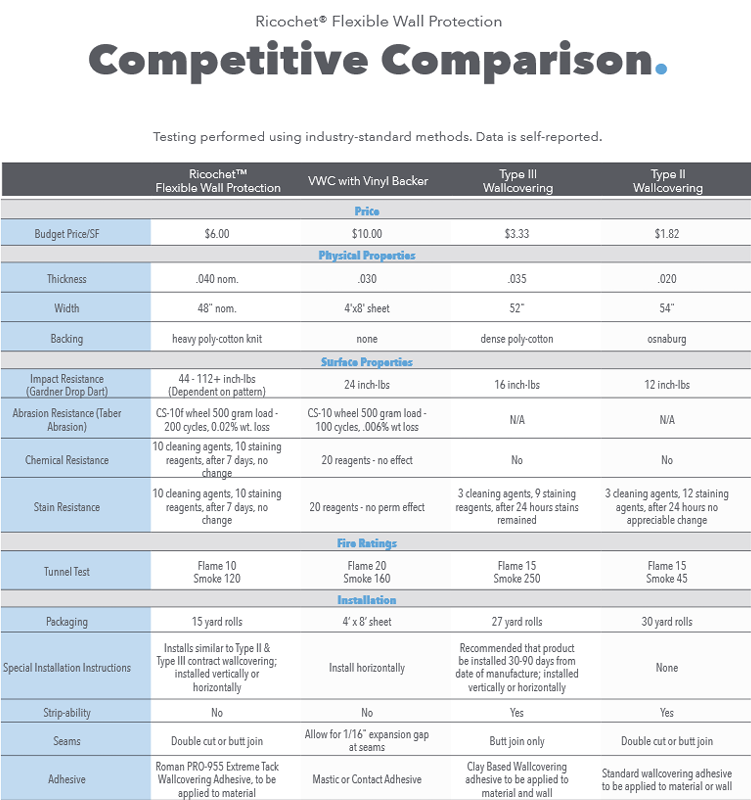
The following Comparison Matrix stacks Ricochet up against VWC, Type II and Type III Wallcovering.
Test Results – Impact and Stain Resistance
Ricochet Flexible Wall Protection maxed out the test equipment for the ASTM D-5420 Impact Resistance Test – it achieved a rating of 112 inch-pound using the Gardner Drop Dart. [The Gardner Drop Dart has a maximum capacity of 112 inch-pounds.]
In addition, Ricochet passed the ASTM D-1308 test for chemical and stain resistance, which means it offers superior graffiti resistance and stands up to harsh cleaning agents. It also passed the ASTM D 4060-07 test for abrasion resistance (Taber Abrasion). This new wall protection also showed no fungal growth using the ASTM G-22-76/G21-96 test.
Ricochet is certified to the Wallcoverings Association Sustainability Standard (NSF/ANSI 342). It contains no phthalates, and has received the California 01350 air quality certification.
Conclusion
Until now, designers have either compromised the look of their design with an institutional product, or have sacrificed preserving interiors for aesthetics. Ricochet® Flexible Wall Protection eliminates the need for such a tradeoff. It contributes to both the aesthetic beauty of a building as well as its longevity thanks to its higher ability to resist wear and tear.
With Ricochet’s inviting textures, rich colors, alluring patterns and a seamless appearance, a wall isn’t just a surface, it’s a canvas.