Introduction
Architects and interior designers pour their hearts into creating beautiful spaces. Facility owners and managers want their new buildings to look good long after the ribbon is cut. How can durability be built into the initial design?
This course offers an in-depth examination of the materials and systems used for all levels of wall and door protection in interior applications. It also presents placement strategies for effective protection based on damage potential, and argues that first-cost value engineering ends up costing building owners more in the long run.
Through this white paper, we’ll help you:
- Explore how the proper installation of wall protection materials – when specified with standard wall construction options – determines their effectiveness in interior applications.
- Recognize when to specify wall cladding vs. targeted wall protection.
- Examine the best-practice options for achieving effective and aesthetically pleasing interior protection.
- Discover strategies to successfully design for the long term by avoiding the trap of first- cost value engineering.
Let’s begin by talking about what it means to design for the long term.
Developing a long-term mindset
Decisions made every day about interior protection elements have a lasting impact on how the facility will look after it’s occupied.
Unless the real costs of those elements are factored into the decision making process, facility owners will continue to trade long-term performance for short-term savings.
A common practice in new construction and renovation projects is to focus on first costs. Sure, we realize every construction or renovation project has a budget, and keeping the project within that budget is an important element of ensuring a successful project.
However, the following real-life example shines a light on how a first-cost focus is harmful in the long run.
A major retail chain did not dial interior protection into their construction standards for their new stores. Almost like clockwork, about six months after the grand opening, the store manager calls to complain of battered checkout lanes, scratched walls and halls in the fitting rooms, etc. The manager’s tale of woe inevitably ends with: “I need some corner guards, wall guards and cart bumpers.”
The application of life-cycle costing vs. first-time costs enhances user satisfaction, while reducing costs over the long term.
Walls take impacts – what’s behind counts, too
As experts on wall protection, we are often called in after a project has been completed, and once the evidence of abuse and damage to the walls & corners is apparent In cases of heavy abuse, our recommendations often include replacing sections of drywall and adding wall protection The cost is higher to retro fit than it would have been as part of the initial project, so consideration of wall construction options is appropriate here. It’s important to think “behind the pretty” … meaning what’s behind the paint or wall covering or wall cladding plays a vital role in overall resistance to impact. The four common interior sub-wall products are:
Drywall – baseline wall construction
Cement Board – offers increased resistance to higher level of abuse. May be used in moisture applications, and is often used in selected areas requiring moisture resistance
Fire-rated Plywood – offers increased resistance to higher level of abuse & more secure fastening of mechanical systems to wall, i.e. handrail, wall guard Used in targeted areas to increase protection from known or anticipated heavy abuse
CMU wall systems, (Concrete Masonry Unit) – 2 hour fire rated walls in school gymnasiums & mechanical rooms May be clad with wall protection to reduce painting or soften look aesthetically Must be sanded to matte finish with thin coat of compound applied first to prevent telescoping through extruded plastics Adhesive takes longer to set up because it cannot evaporate as readily as with the other substrates listed.
Wall cladding materials
We're now going to turn our attention to the individual elements of wall protection, and concentrate on two specific topics:
- Wall Cladding – think of applying materials to protect large areas over the entire face of the wall
- Targeted Wall Protection –specific products designed to absorb impact and protect the “targeted” portions of the underlying wall
This white paper deals with wall cladding. See our Targeted Wall Protection white paper to learn about those products and applications.
We’ll now delve into your “all-wall” cladding options.
Flexible Wall Protection
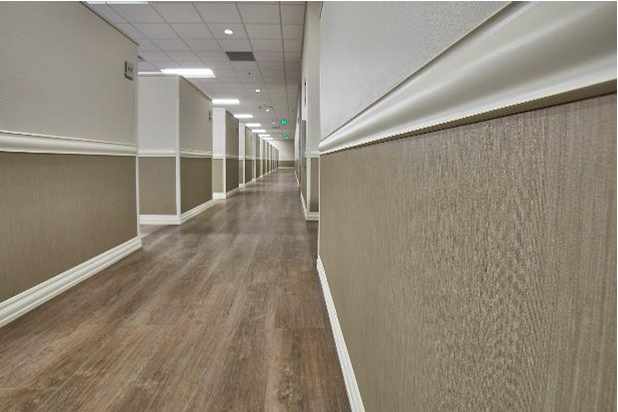
A brand new class of materials called Flexible Wall Protection is showing great potential to be a true game changer by combining the look of wallcovering with the durability of rigid wall protection, so walls can make an impact while being able to take the impact.
Feature of flexible wall protection are:
- Generally decorative
- .040 thickness … as thick as rigid products
- Withstands moderate abuse
- Many patterns, textures & colors available
- Most are Class A fire rated
As with all wall coverings, proper surface preparation and adhesive is critical to prevent mold behind flexible wall cladding.
Wall Cladding System for Production Environments
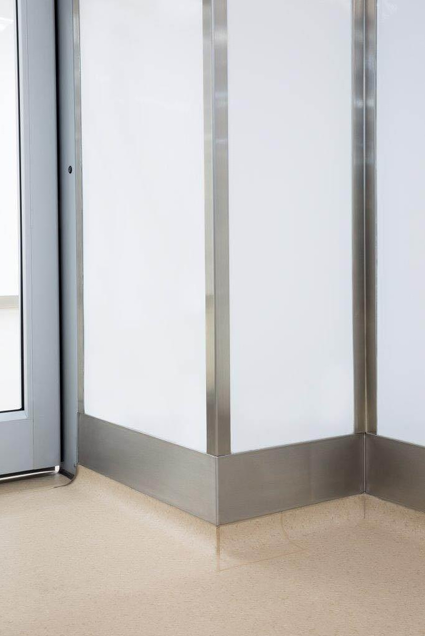
System is comprised of two integrated products:
Stainless Steel Wall Base
Complete waterproof transition from floor to wall when installed per manufacturer’s instructions. The base is compatible with a variety of flooring types.
Hygienic Wall Cladding
Industrial-strength, non-fiberglass reinforced panels offer high impact resistance, and are thermally stable to handle heat and humidity fluctuations. Field fabrication is sped up because panels are easily cut and don’t produce the harmful dust associated with FRP fabrication.
The system offers tremendous design and material flexibility. Architects and building owners can pair the wall base with the wall panel option that meets their needs, including: Hygienic NRP Wall Cladding, Solid Surface Wall Cladding, or Stainless Steel Wall Panels.
This system has applications in labs, pharmaceutical production, clean rooms, food processing and commercial kitchens, hospital operating rooms, university dining halls, and restaurants.
Solid Surface Wall Cladding
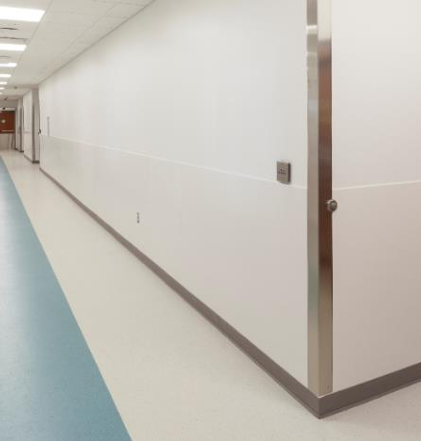
This is an excellent and durable solution for spaces like operating rooms and other sterile environments. Here we show ¼” thick solid surface sheets on drywall protect an Emergency Dept. corridor. Feature of solid surface wall cladding are:
- Non-porous
- Repairable and renewable – long life cycle
- Many colors available
- Rapidly renewable content available
- Material cost is higher - install is less expensive
Extruded Plastics
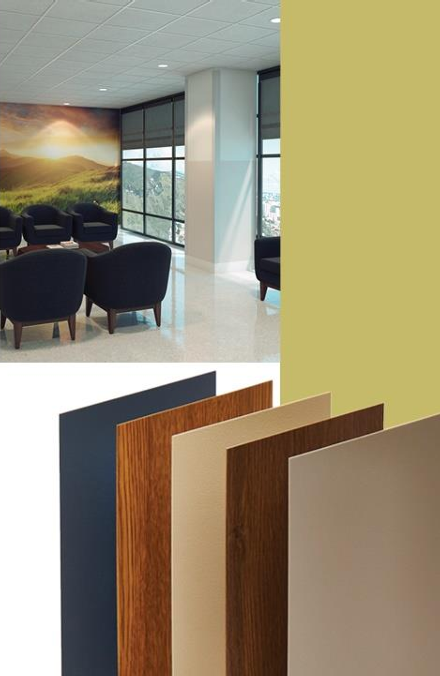
Usually produced in sheets or rolls, rigid vinyl extruded wall cladding comes in the following standard thicknesses:
- .028 used when flexibility is needed – for example, wrapping a column
- .040 used to eliminate re-painting where repeated scuffing wears through the top layer of drywall
- .060 used to protect against gouging of wall
- .080 used to for maximum protection, often used on top of cement board or fire rated plywood
Most products offered in the US are Class A fire rated. It’s important to remember that sheet products are not recommended for areas with excessive moisture since any moisture behind the material will encourage mold growth in air pockets left in adhesive.
Woodgrains can be applied through a co-lamination where the grain is applied in a thin film, then is sealed by a combination of heat and pressure. This material is extremely durable and does not peel off.
Sheets are 4' x 8' standard. Rolls often are applied as a half-wall wainscoting, and it is – recommended to provide a “break” the run every 12' to allow for expansion and contraction.
Best practices: Vinyl wall cladding installation
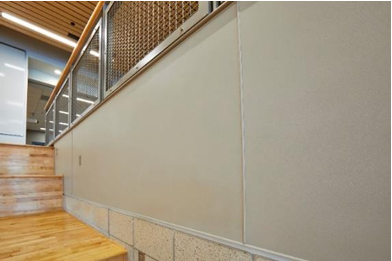
Apply adhesive with a notch trowel and allow ridges to turn translucent before use. Set-up time depends on the substrate; drywall dries faster than block. Most adhesives also allow some repositioning after application.
Once the sheet is in place, an extension J roller is used to roll out air pockets.
For making cut outs, sheet, may be scored with a knife onsite - No motorized or table saw is required, which saves installation time.
Finishing off Sheet Goods – Trim vs. Caulk
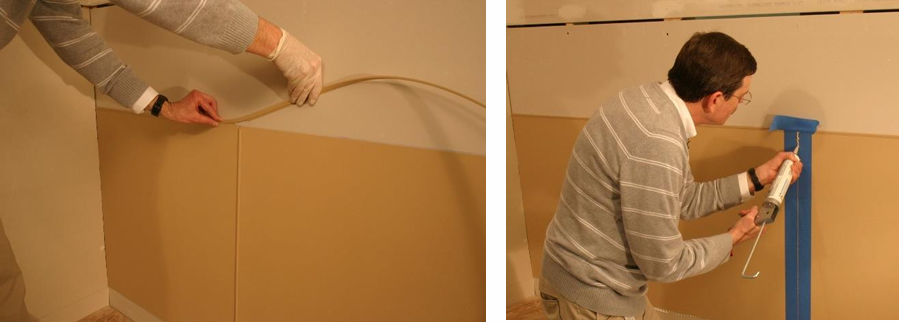
One additional consideration is in the finishing of sheet through the use of various trim pieces or color-matched caulks – the two options are shown above
The decision on which to use is really based on two factors:
- Aesthetics – the application of trims provides a more highly finished look to the installation. Caulks finish the seam only, but do provide some appearance “smoothing” by making seams less visible.
- Cost – on the other hand, the installation of trims can be more expensive, especially due to the labor involved in cutting and placing. Caulk can be less expensive and less labor intensive to install.
One caution on applying trim to sheet: The trim pieces do protrude a bit from the wall. It’s possible for carts, gurneys or wheelchairs to snag and tear off the trim piece. It’s rare, but it can happen. Caulk may be the better finishing option for seams where snag potential may be high.
Wall Panel Systems
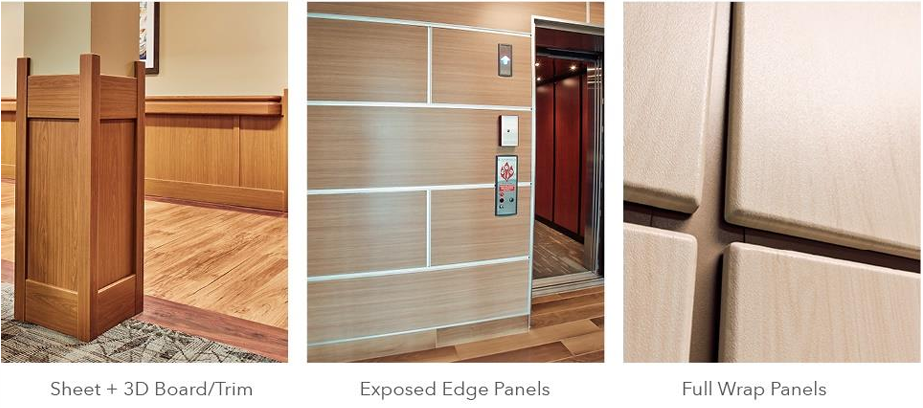
Another form of while-wall cladding or protection are wall panel systems. The three most-common panel systems are shown above
Sheet with 3D wall trim combines high-impact resistant wood grain sheet with dimensional boards or molded trim with full-wrap edges. This combinations can be used for wainscoting or in full-wall applications.
Exposed square edge panel systems allow for the panels to be cut and assembled in the field to ensure easy installation for difficult areas or challenging wall conditions. This system easily accommodates white board and fabric panels. Trim pieces usually come in a clear or black anodized finish.
Full-wrap beveled edge panels – the best systems feature a full-wrap construction around all edges and corners, with a full back panel made of recycled regrind material. Protection along the edges and corners prevents delamination at the most vulnerable parts of the panel.
Printed Wall Protection
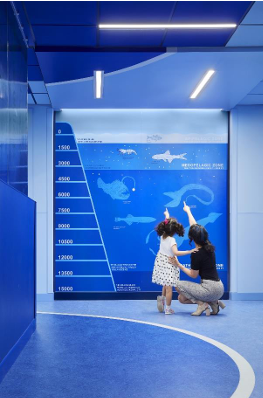
As we draw this white paper to a close, another cladding option is printed wall protection.
Digital, licensure-secured imagery is back printed on durable clear PETG sheet. The artistry is limited only by the designer's imagination. This form of wall cladding is perfect for:
- Inspiration
- Education
- Wayfinding
- Branding
Conclusion
No matter …
- What type of building
- Which area within the building
- The type of wall construction …
There’s a good chance it will need some type of protection from wear and tear. The important thing to remember is if you want your interiors to make and impact … it matters how well your walls can take an impact!