Introduction
When it comes to expansion control in buildings, there are three types of movement that need to be accommodated:
- Thermal
- Seismic
- Wind load
This white paper is going to discuss each of these, their impacts on buildings, and expansion control strategies to keep these forces of nature for damaging buildings.
Thermal Movement
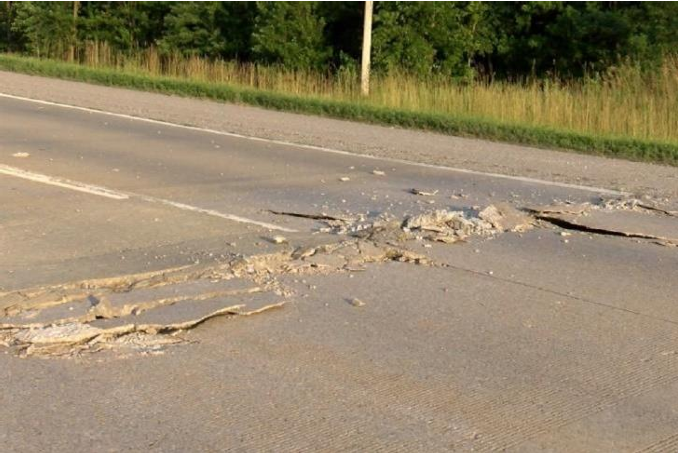
Thermal movements are caused by daily environmental temperature changes in and around the structure. Thermal movement is primarily “one-directional” in nature and is the result of the expansion and contraction of the built environment as it is affected by heat, cold and humidity levels. The amount of movement thermal joints must accommodate remains constant throughout the building and have a movement of plus or minus 10-25% of the nominal joint size.
Just like humans, buildings react to changes in temperature and, depending on geographic location, temperature swings can by quite wide. Think of it this way, a building near the equator likely will experience much less variability climate-wise than, say, a building in New York City or Northern Germany.
For example, let’s look at a place like Ponce, Puerto Rico – the temperature moves very little above or below the average of 77° F / 25° C. Whereas the 10-yr. average in New York City swings from a low of 27° F / -3° C to a high of 86° F / 30° C.
Depending on the season, building materials expand with heat and contract with cold. A classic example is pavement buckling in summer – the combination of ambient high heat and solar load causes concrete to expand, and at weak points the concrete pavement “explodes” or buckles.
Buildings may not experience as violent an event, but if expansion joints aren’t put in, then thermal expansion and contraction can cause buckling of surfaces in place like roofs and interior floors.
As we always say: If you don’t put in a proper expansion joint, Mother Nature will put one in for you. Across larger structures – think places like stadiums and airports – there is a lot more surface area exposed to thermal effects. This was a concern for architects and engineers designing a terminal expansion at the Manchester Airport in the United Kingdom.
The £1 billion expansion of Terminal 2 is 150 percent larger than the original to boost passenger capacity and provides gate and tarmac space for the largest jets now in operation. The new terminal features 32 new shops and food and beverage outlets.
Architects were concerned about thermal movement creating a .87" / 20mm difference in floor heights across the slabs or sections of the terminal. This would present a trip hazard for pedestrians transiting the terminal, which could potentially be present over weeks or even months during the hottest or coldest times of the year.
The solution was a project-specific “glide plate” floor joint. This custom solution had to move in three directions while simultaneously addressing the rigorous heavy-duty loads encountered in this major transportation hub.
Seismic Movement
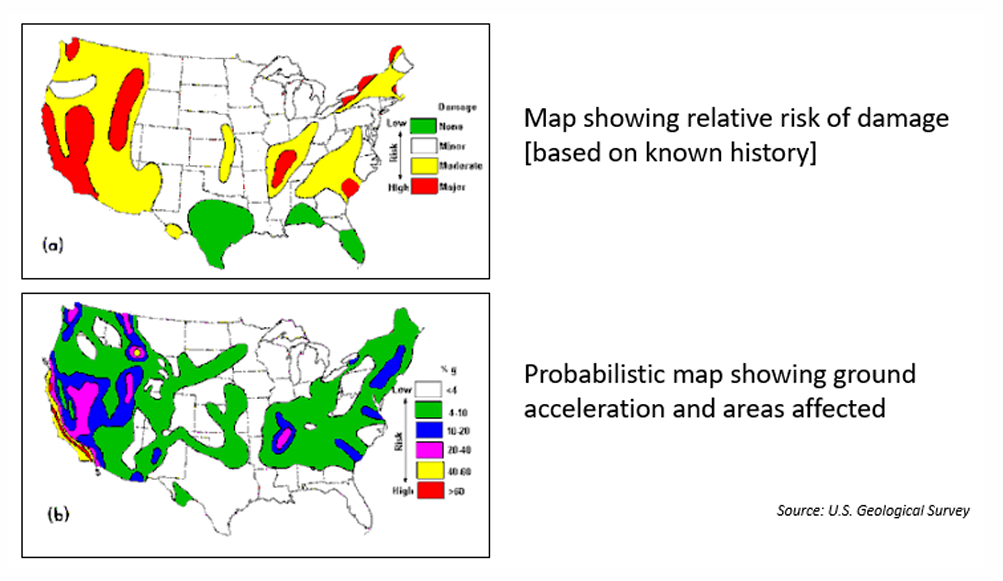
Seismic activity is caused by shifting of the earth’s tectonic plates (i.e., earthquakes, tremors, etc.), and shifts along fault lines. Seismic movement may be horizontal, vertical, in shear or a combination of all three. Seismic expansion joint widths may increase with higher floor levels as well. These joints must have the capacity for movement of plus or minus 50-100% associated with them.
In the U.S., just about everyone thinks California and the San Andreas Fault as the prime location for seismic activity. What may surprise you is that there are numerous seismic zones.
One additional consideration is a new theory on increased seismic activity due to oil and gas exploration and production. Hydraulic fracturing or fracking – or more-correctly, wastewater reinjection – may be causing pocket collapses and slippage between layers of rock that trigger small seismic events. One focal point is in Oklahoma as the U.S. Geological Survey reports:
Beginning in 2009, Oklahoma experienced a surge in seismicity. This surge was so large that its rate of magnitude 3 and larger earthquakes exceeded California’s from 2014 through 2017. While these earthquakes have been induced by oil and gas related process, few of these earthquakes were induced by fracking.
The majority of earthquakes in Oklahoma are caused by the industrial practice known as "wastewater disposal". Wastewater disposal is a separate process in which fluid waste from oil and gas production is injected deep underground far below ground water or drinking water aquifers. In Oklahoma over 90% of the wastewater that is injected is a byproduct of oil extraction process and not waste frack fluid.
Minor earthquakes are far more prevalent than severe mega-quakes like the 1994 magnitude 6.7 Northridge quake in California, or the 9.1 Christmas-time earthquake (and tsunami) off Sumatra in 2004. When it comes to expansion joint systems, it is important to select systems that can “reset” themselves after a minor seismic event, and allow workers to reposition panels easily.
Christchurch, New Zealand, is no stranger to earthquake activity, with a magnitude 6.2 earthquake occurring there in 2011 that took 185 lives. Preparedness for these events was topmost on the designers of the new Justice Center in that nation’s capital city.
The Christchurch Justice & Emergency Services Precinct (the Precinct) was a $400 million project, and the first major public building to be built and opened in Christchurch by the government since the earthquake of 2011. The new precinct was constructed on base isolators and designed to withstand the most severe earthquakes.
Notable on this project was the installation of a new seismic joint (shown here), which uses ceramic magnets to hold the panels in place, and stronger braided-metal arresting cables. The pan is expertly engineered to accept many common infill materials to minimize sightlines.
The magnetic retention system allows for generous daily thermal movement and minor lateral shear allowances without disengagement from the wall
During heavy seismic cycles the panel disengages. Arresting cables ensure panels remain against walls/ceiling so corridor egress widths are not impaired.
After the quake, disengaged panels can be repositioned and put back in place by engaging the ceramic magnets.
Wind load Movement
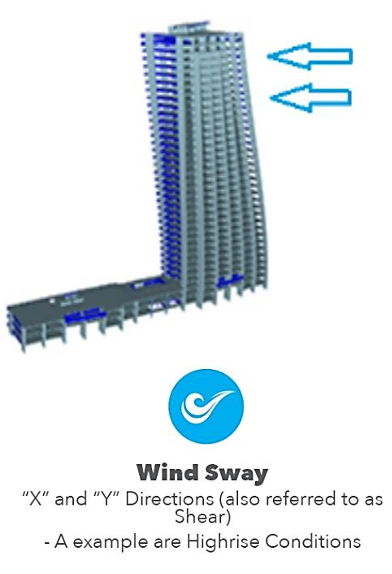
We’ll wrap up this white paper with a discussion of Wind load forces on buildings. Most often, Wind load is a factor in high-rise conditions.
Wind load induced movement is caused by high winds forcing the structure to sway. This movement is normally perpendicular and/or parallel to the joint. This is common where a low horizontal building span meets with a taller vertical element, such as the lobby of a hotel adjacent a high-rise component. Movement in these joints is typically 50%+-.
Over time, the near-constant effects of wind pressure on the sides of buildings can lead to serious issues:
- Structural failure due to wind load
- Torsion or swaying
- Viscosity of air leads to shear movement stress
- Cladding failure due to wind load or impact of debris
- Erosion of certain building materials
- Aerodynamic instability
When designing a structure, it must be able to both withstand high Wind loads, but also work with them. As with seismic activity, expansion joint systems should be able to “flex” and yet remain in place as the building sways or torques.
Conclusion
We hope this white paper has given you a glimpse into three forces of nature that can impact buildings – temperature, seismic activity, and wind. The key is to remember that Mother Nature will put in an expansion joint if one isn’t designed into the structure and built well.
The good news is that there are architectural expansion joint solutions that can help buildings handle movement and retain their structural form and aesthetics.