Introduction
Designers understand how to strike a balance between the aesthetics of the spaces they create, versus its performance and functionality within their commercial buildings. Part of their process includes considering the use of the building’s spaces and their individual daily functions. All of these input points congeal to inform the specifications documents. When considering floorexpansion joint covers, we will review the various pieces of the puzzle that must be understood in order to properly choose a floor expansion joint cover, specifically when they are required to meet heavy dutyinterior loading challenges.
First, know that not all expansion joint covers need to be classified as “heavy duty.” The vast majority of those available on the market are categorized as “standard” and already meet extremely high volumes of pedestrian use, mail carts, common smaller facility maintenance needs, et cetera. However, once the project requires more stringent loading, such as a hospitals, mass transit markets like airports, or truly heavy duty requirements such as a data centers or warehousing projects, you need to take more careful consideration.
Typically, an architect has a standardized building floor deck that meets or exceeds a “Distributed Load” requirement of 150 lbs/sqr foot (or 2.0 kN/sqr meter). This generalizes how an entire floor and all its components work together to resist all the furniture and people it is supporting. When considering an expansion joint cover, it is often best to think of them as a cover over a gap. These long, narrow metal covers are spanning between two structural decks, sometimes only 3” (75mm) apart, but they can get as wide as 24” or greater in width in seismic regions. This cover in effect is acting like a “mini bridge” located right in the middle of your busy space. Its job is to support live loads while simultaneously moving along with the building’s superstructure.
By thinking of an architectural joint cover in this framework, the manufacturer will design the cover’s profile, thickness, and alloy to resist the equipment and people acting on directly on the covers- often considered a “concentrated load”. There are various ways to define this, but to keep it simple, the concentrated or “point load” is the pressure exerted by a piece of equipment measured over a small 1” diameter (25mm dia.). A more accurate way to define these specific point loads is by studying the type of wheels a piece of equipment is being transported on.
Various types of equipment or supplies traveling through the building could have small hard caster wheels, oblong hard rubber ones, pneumatic (air-filled) wheels, etc. – each type has a different footprint onto which they spread the weight they are carrying.
Consider the common types of equipment in your project:
- Do you have 2 story ceilings requiring a change of lighting or HVAC filters?
- Are you wheeling a mobile xray machine down a hospital corridor weighing 1200 lbs (544kg)?
- Is the back-of-house hallway in your building a pathway from the loading dock to storage?
When we think past just the occupants of a building and consider the equipment traveling through it, we gain a sense of the type of expansion joint cover to specify. Equipment such as pallet jacks, forklifts, hospital gurneys, riding floor scrubbing machines, manlifts (scissor lifts) – all of these impart a highly concentrated load directly beneath the touch point of their wheels on a cover plate.
Some manufacturers provide project-specific verification of the weight resisting abilities of the expansion joint covers they manufacture. A study can be performed by requesting a Finite Element Analysis report (FEA). These computer-generated analytics test the cover plate to the point of fatigue (or failure) and allow their profiles and thicknesses to be verified or altered to meet the specific need. This ensures a maximum lifespan of the cover plate over a period of around 25 years of stringent use! Often, manufacturers will then test the calculations against real world abuse to further verify their findings.
In summary, when specifying expansion joints, know that they are one of the hardest working passive devices you rarely think about in your built environment. Consider their profile, how they operate (expand and contract), the environment they are being deployed in, and the wide array of loads they need to withstand. If properly specified they can easily handle even the toughest loads – all while moving in three dimensions! If you take these few steps, you are on the right path to avoid future frustrations.
Join the Movement™ Expert Recommendations
432 Series Moderate Duty Recessed Floor Expansion Joint Cover
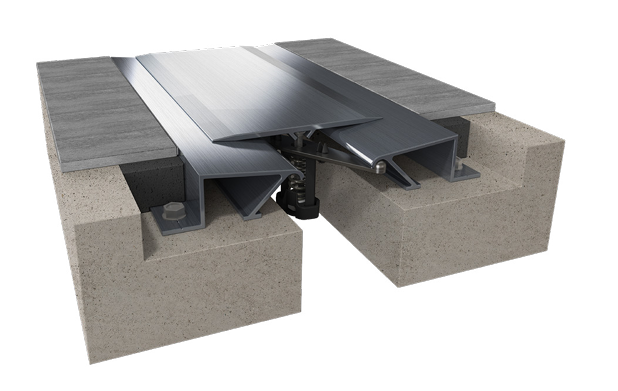
The 432 Series floor expansion joint cover accommodates more stringent loading demands commonly found in airports, healthcare and civic center projects. It achieves horizontal, vertical and shear seismic movement patterns. Ideal system for with a range of flooring types including but not limited to: carpet, vinyl, ceramic tile, terrazzo and polished concrete. The 432 is engineered with exposed hardware which provides simple accessibility for joint maintenance and annual inspections.
787NS Series Heavy Duty Recessed Floor Expansion Joint Cover
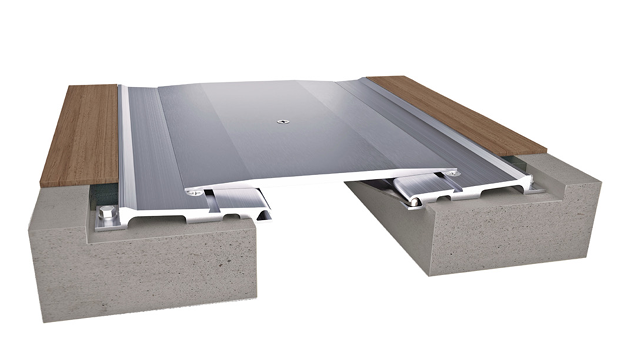
The 787NS Series recessed floor expansion joint system is designed to support truly heavy equipment movement in interior environments. It is ideal for a range of project types, including data centers, modular construction, and fulfillment center warehousing. Its tapered cover plate and frames provide a smooth, ADA-compliant design that maintains a level surface and stays flush despite daily and seasonal joint expansion and contraction.
So don’t let your building settle. Because 150 years of combined field experience makes for an excellent project.
Need a consultation? We’re there. Need help selecting a system? We’ve got you covered. Need help with installation? Call us.
Contact us today to learn more about how we can help you Join the Movement™ to help your building move.
Experienced Experts. Proven Products. Helping Buildings Move All Over the World. Join the movement™.