Introduction
A growing body of research suggests that healthcare environments can positively influence the healing process, putting more emphasis on the importance of the work that designers and architects do every day.
This white paper explores trends in healthcare design and looks at newly published research to offer evidence-based strategies for creating quiet, authentic spaces that promote rest and healing.
Nature itself is the best physician. – Hippocrates
Healing is a process of returning to balance. In times of serious sickness, we rely on doctors, specialists and nursing staff to administer the best care. But in recent years, we have also grown to expect the quality of the healthcare environments to match the care we receive. We've gone so far as to tying those observations (through The HCAHPS (Hospital Consumer Assessment of Healthcare Providers and Systems) scores to hospital reimbursements. So it isn't a surprise that a great focus and research is being put on understanding and maximizing the impact that well-designed healthcare spaces have on patient experience and healing. For finding balance, we often look to nature and …
Quietude
Noise and sound are technically the same things. The bigger the waves are (i.e., their amplitude), the stronger the vibrations are, and the louder the sound is. However, sound is something that we hear in general. Noise is something that we can hear, but don't necessarily want to hear.
Pleasant sounds of nature between 20-40 dB … things like the rustling of leaves, birds chirping, quiet rural area, or the sound of a stream. Annoying noise moves well north of 40dB. For example:
- City traffic at 70 dB
- Hair dryer at 90 dB
- Helicopter at 100 dB
Researchers from John Hopkins University found that…
Since 1960, average daytime hospital sound levels around the world have risen from 57 decibels to 72; nighttime levels have jumped from 42 decibels to 60. All of these figures exceed the World Health Organization's 1995 hospital noise guidelines, which suggest that sound levels in patient rooms should not exceed 35 decibels (similar to a typical library) during the day, and <30 decibels at night.
Another study counted the number of alarms that went off over 12 days, and it amounted to an average of 350 alarms per patient each day. For one type of breathing monitor, 90 percent of the alarms were false positives.
The outcome for patients? Numerous reports and studies point to the harmful effects of noise, which primarily include:
- Elevated stress
- Impeded recovery
- Disturbed sleep
- Ineffective communication between patients, staff and visitors.
Florence Nightingale called it more than a century and a half ago.
However, noise also has impacts on staff. In a survey of 870 nursing staff, The Centre for Occupational and Health Psychology in UK found that those reporting more frequent noise exposure had more injuries/cognitive failures, greater stress at work, and worse general health as well as more anxiety and depression.
In a very jarring example, a patient at Massachusetts General Hospital died after staff turned off a beeping heart monitor – just another example of a national problem of hospital staff dealing with noise fatigue. Noise isn't just harmful to patients … it also wears on staff, so much so that, in this case, they turned off a vital monitoring device.
Strategies to reduce hospital noise
Areas to concentrate on are:
Mechanical systems

- Fan design and selection
- Larger ducts
- Discharge rates for air volumes
- Vibration isolators
- Film and metal no-fill silencers to attenuate duct noise
Paging and Alarms
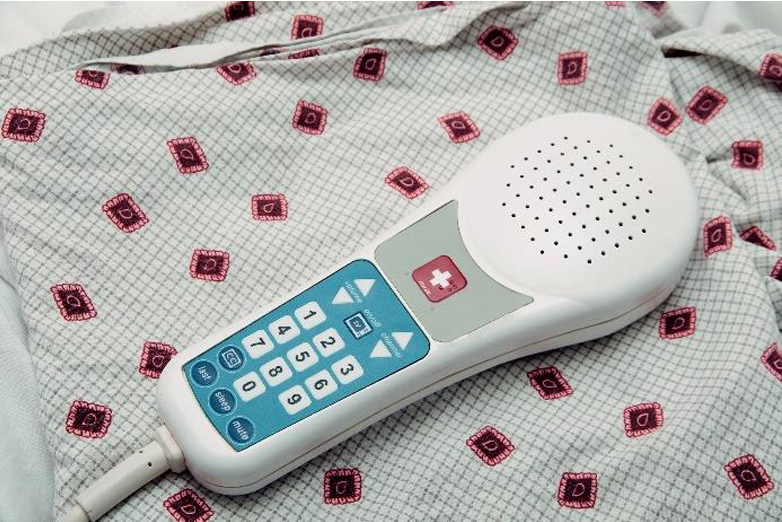
- Paging systems. Nurse call and patient telemetry systems can reduce the need to broadcast pages and alarms throughout patient care areas.
- Clinical alarms. Wireless communication devices for staff and future "smart" algorithms for patient-specific alarm thresholds can help reduce the number of alarms and alarm noise levels.
Interior finishes
Noise reduction in patient spaces and corridors can greatly benefit from several products designed for sound absorption:
- Ceiling tiles made from glass fiber can be very effective in absorbing sound. One area to be aware of is noise from ceiling plenum equipment, which might be better attenuated by mineral fiber ceiling panels.
- Wall coverings in the form of fabric panels or other sound absorbing material help reduce noise levels.
- Flooring should be chosen to lower noise transmission from footfalls, carts and equipment. Choices include rubber and, of course, carpet.
Quieter cubicle track
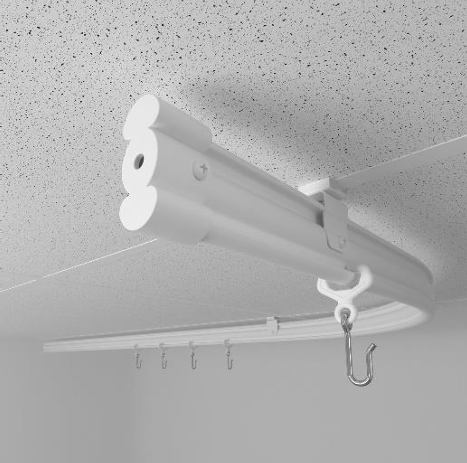
An acoustics study at St. Joseph Medical Center in Tacoma, Wash., found that when the privacy curtain was opened and closed, a traditional track and carrier produced 50% more instantaneous noise during the test.
A new style of bendable track and matching carrier produced 75% less sound than the original grooved track previously installed.
The role of imagery

It's no secret that the healthcare market is as competitive as any other business. The ability to attract patients is paramount to maintaining and building revenue streams, especially for major medical centers.
While much of the marketing is centered on medical expertise, top-rated diagnostics, and the care the patient receives, the overall condition of the facility plays a role in the attractiveness of the hospital.
We know from the patient satisfaction surveys that thoughtfully curated imagery, be it in art, signage and environmental graphics can improve one's hospital stay….by connecting with the community and engaging in a visual conversation, improving wayfinding, creating a positive experience. As designers we employ imagery almost automatically. But there is research that supports the healing effects of art as well.
The main point here is that décor and ambiance of the facility plays a role in the overall experience, artwork being one key factor of the interior's attractiveness.
In a blog for the Huffington Post, Brooke Seidelman wrote on evidence-based design and the impact of art in healing:
In 1984, a landmark paper by Dr. Roger Ulrich helped establish the field of Evidence-Based Design through a study in which he found that patients who had hospital rooms with a window required less pain medication and recovered at faster rates than patients in rooms without windows. Since that publication, the field of Evidence-Based Design has expanded and numerous studies have shown that artwork in patient rooms offer comparable benefits – promoting healing, relieving patients' pain and stress, and increasing their overall well-being.
The Cleveland Clinic, one of the nation's largest and most reputable hospitals, has had an art tradition since its inception in the 1920s. Its collection now numbers about 6,800 works, not including its 15,000 art posters and it established an in-house art program in 2006. Two years later, it formed the Arts and Medicine Institute.
The world-class Cleveland Clinic surveys 826 patients as to art's general impact on patient experience.
- More than 60% of patients reported stress reduction when they viewed art found in the hospital's contemporary collection.
- 73% said the artwork somewhat or significantly improved their mood.
- 77 percent described Cleveland Clinic's environment as "inviting/welcoming."
Art in skilled nursing and memory care
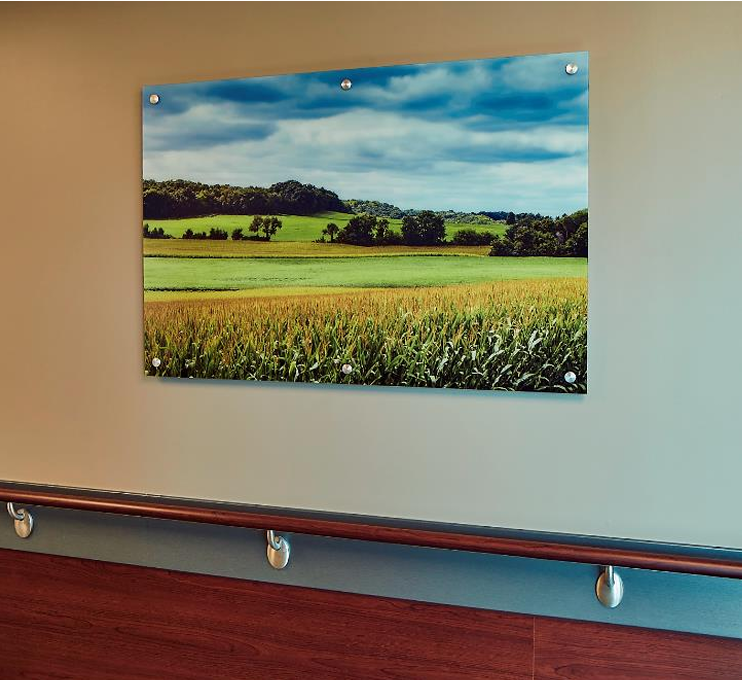
The FGI Guidelines recommends that artwork can help provide a positive distraction for residents.
Certain themes for artwork have been suggested:
- Waterscapes, containing calm or non-turbulent water.
- Landscapes, containing visual depth or open foreground, trees with broad canopy, savannah landscapes, verdant vegetation.
- Positive cultural artifacts (e.g. barns and older houses).
- Flowers, which are healthy and fresh, familiar, in gardens with open foreground.
- Figurative, with emotionally positive faces, diverse and leisurely.
In both skilled nursing and memory care settings, art can be used in a therapeutic way to evoke memories And emotions, inspire social engagement, and can be an aid in wayfinding.
Art in pediatric care
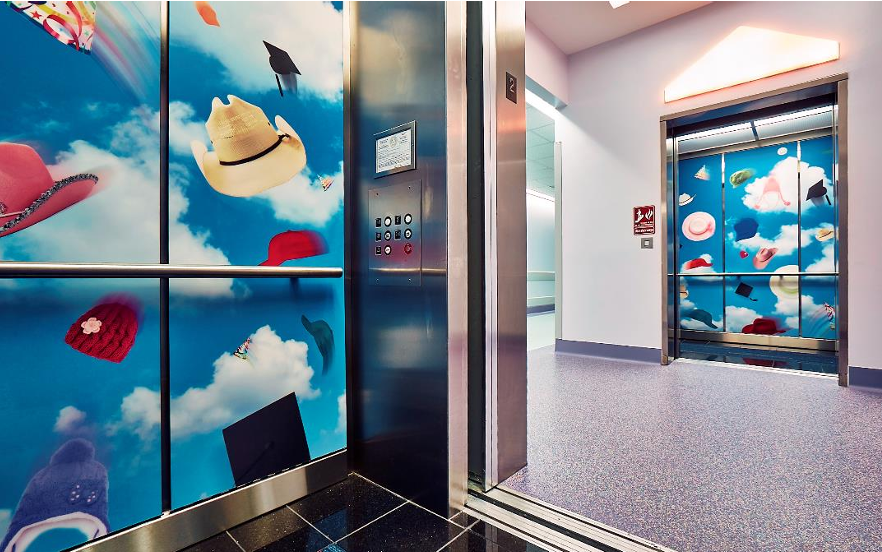
Positive distraction is a term used to describe the belief that environmental features can elicit positive feelings, hold attention and interest and, therefore, reduce stressful thoughts. This idea has been developed by Malenbaum and colleagues in a review for the International Association for the Study of Pain. These authors regard a typical treatment setting as one that lacks any positive distraction and argue that environmental stimuli, including visual art, may enhance patient control.
Although there have not been many studies using nature images with pediatric populations, a preference study of 5- to 17-year-olds, Eisen (2006) showed that children in hospital settings prefer representational nature art over abstract art. In fact, contrary to the common assumption that children like only large cartoon-like or fantasy images, a study with 5- to 17-year-old patients at Memorial Hermann Hospital in Houston, Texas, showed that children rate nature images with bright colors, water features, and nonthreatening wildlife quite highly–often higher than typical child art (Nanda, Chanaud, Brown, Hart, & Hathorn, 2009).
The presence of a strong context that children could associate with was a defining feature of preferred images. Content drove preference more than style, though color was a key determinant.
All of that to further support the idea that young children especially are very impressionable, and they remember emotions of a given experience for years to come. If we, as designers can lessen the hospital stay stress and anxiety by incorporating colorful, nature-inspired art, we can play a part in their healing process.
Art in behavioral health
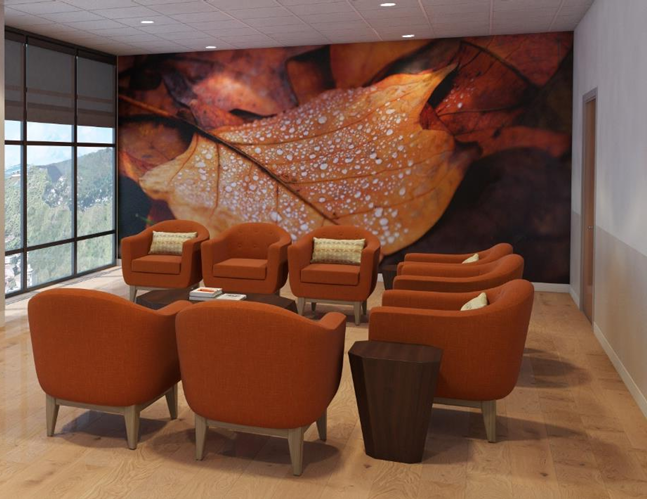
Behavioral health is a major area of focus for both practitioners and designers. Nearly one in five U.S. adults live with a mental illness (51.5 million in 2019). More disturbingly, one in six U.S. children between the ages of 6 and 17 has a treatable mental health disorder such as depression, anxiety problems or attention deficit/hyperactivity disorder (ADHD). A lot of people out there need mental health support and the design community is here to improve their environmental experience when they visit a clinic or a hospital in order to get better.
Many aspects of design can help all occupants–daylight, connections to nature, lighting for circadian rhythm, good acoustics–are especially impactful for behavioral health patients. Connection to nature can be achieves by accessing the outdoors, courtyards, gardens, window view or artwork depicting scenes that are familiar, calming, optimistic.
There is an increasing amount of scientific evidence that proves art enhances brain function. It has an impact on brain wave patterns and emotions, the nervous system, and can actually raise serotonin levels. Art can change a person's outlook and the way they experience the world.
Art therapy can be used as a complement to traditional mental health treatment. The aim is to manage behaviors, process feelings, reduce stress and anxiety, and increase self-esteem. Self-discovery: Creating art can help you acknowledge and recognize feelings that have been lurking in your subconscious.
There has been much philosophical and anecdotal discussion about the benefits of art and healing, but less empirical research exists in the literature.
Art in spatial orientation
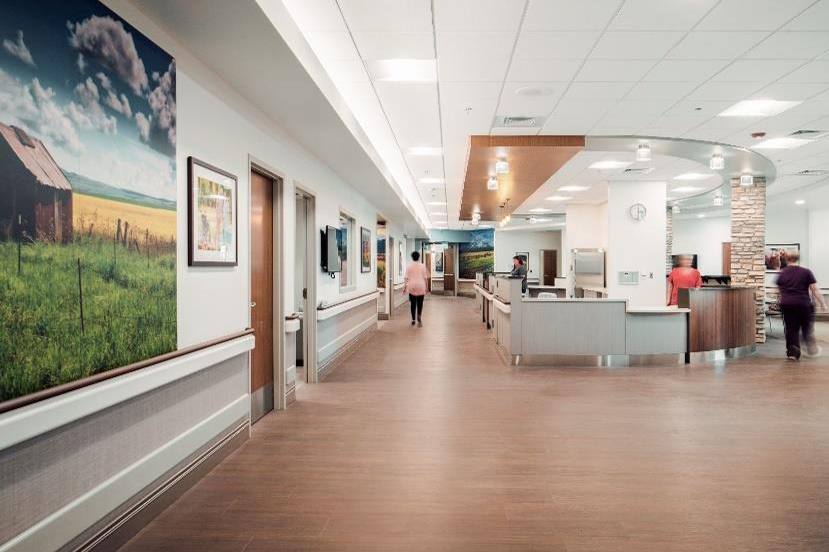
Now, we also know that visitors and patients within a healthcare space are often times burdened emotionally and stressed due to circumstances of their visit. Therefore any information that's confusing or competing for attention isn't helpful.
A wayfinding system that helps patients, families, visitors and staff find their way around a healthcare space is critical. Artwork can play a very successful role in such a solution next to signage and finishes.
Broadly, urban design and planner Kevin Lynch (Lynch 1960) suggests a "good environmental image gives its processor an important sense of emotional security". Thus, wayfinding supports users and contributes to feelings of ease within an environment (Gibson, 2009). David Gibson wrote extensively on the topic in his book, "The Wayfinding Handbook".
Now, we also know that visitors and patients within a healthcare space are often times burdened emotionally and stressed due to circumstances of their visit. Therefore any information that's confusing or competing for attention isn't helpful.
Conclusion
We hope this white paper has helped you understand the differences between stress-inducing noise and restful sounds. Also, that there are effective strategies for reducing noise fatigue that is harmful to both patients and caregivers.
In addition, we’ve given you research-based approaches to successfully incorporate artwork and imagery elements that not only increase patient and resident satisfaction, but can also play a role in their well-being and healing.
About Inpro
Founded in 1979, Inpro® is a global provider of high-performance, design-forward architectural products for building professionals.
Based in Muskego, Wisconsin, Inpro makes and services products with an obsessive commitment to protecting buildings and the well-being of the people who use them.
Inpro's product categories include door + wall protection, washrooms, expansion joint systems, privacy, elevator protection, architectural signage, and commercial window treatments.
Visit inpro.com for more information.