Introduction
As we assess what we've learned from the COVID-19 pandemic, keeping interior spaces clean is part of the equation to preventing similar situations in the future.
Since no building is immune from the spread of sickness and infection, we look to take precautions through more• stringent cleaning measures to keep guests, students, staff, patients and residents safer and more comfortable.
This whitepaper will cover common ways surfaces can become contaminated, the causes, the impacts and the solutions for cleaner, more-resilient interiors.
Mitigating the spread
Over the last 15 years, the Healthcare Industry has ramped up its focus on preventing cross contamination. Eliminating hospital acquired Infections has been the mission of Environmental Management and Services –first through understanding transmission and then countering with cleaning and disinfecting.
As a result, choosing the right building materials have become equally important. Through education, training, tracking and measuring outcomes, healthcare facilities have reported reductions in HAI across the country.
Now we find ourselves in a new environment, where socially transmitted diseases are increasing as bacteria and viruses spread throughout communities and facilities of all kinds. It's to our advantage to take the lessons learned from healthcare and apply them across the built environment.
Both virus and bacteria come in different forms, but both are looking for a host … that's us! Many are transferred with direct human to human contact, but scientific research has showed us that microbes can survive for periods of time on surfaces and act as an intermediary for transmission.
For this whitepaper, we'll focus on materials that limit the life of bacteria, viruses and molds by cutting off their ability to colonize in addition to using disinfectants to eradicate them.
What are the legalities?
But before jumping in there are legalities to understand:
- The EPA oversees all substances (pesticides) that work to destroy bacteria and viruses.
- Both disinfectants and antimicrobials are considered pesticides.
- Substances must have EPA approval before making claims that benefit human health
This sets the stage for how we move forward in developing an approach to limit cross contamination.
Surfaces as paths of transmission
Germs move by touch. For example, healthcare provider hands become contaminated by touching germs present on medical equipment or high touch surfaces and then carry the germs on their hands and spread to a susceptible person when proper hand hygiene is not performed before touching the susceptible person.
And we need to address hand washing. Numerous public health experts extol the benefits of hand washing to slow the spread of disease – and they’re right! It can help reduce the overall microbe count on hands.
However, the benefit of hand washing or using “sanitizing” hand gels in reducing transmission is predicated on two key factors: Did the person actually wash/gel their hands and 2) did their hands get truly sterile by doing so?
The unfortunate answer to both question is no. Research provides several examples of people not washing their hands after going to the bathroom, or in the case of healthcare … between patients. And, the other failure point is people don’t often wash long enough to drastically reduce microbes, viruses and spores on their skin.
Microbes of all kinds can persist on surfaces
Current evidence suggests that SARS-CoV-2 may remain viable for hours to days on surfaces made from a variety of materials.
Researchers in the medical field have tested the viability of microbes in common healthcare fabrics, including those used in privacy curtains. A study at Shriners Hospital for Children showed that staph bacteria survived up to 56 days on polyester type fabrics, and the shortest was 11 days. The point here is that 11 days is more than ample time for touch-based acquisition and transmission of bacteria.
The point here is that the type of surface – whether porous or non-porous – and in ANY facility – can play a role in how long bacteria can survive.
Aerosolizing through coughing and sneezing
Sprays and splashes occur when an infected person coughs or sneezes, creating droplets which carry germs short distances (within approximately 6 feet). These germs can land on a susceptible person’s eyes, nose, or mouth and can cause infection (example: pertussis or meningitis).
According to the CDC, coronavirus is more commonly transferred through respiratory droplets and aerosols than through touching surfaces and objects. However, evidence suggests SARS-CoV-2 virus may remain for hours to days on a variety of materials. And the CDC recommends cleaning and disinfection of surfaces as a best practice to prevent the spread of COVID-19 and other viral illnesses.
Don’t lose sight of mold
With all the talk of pandemics, it’s easy to overlook mold and its impacts.
Exposure to damp and moldy environments may cause a variety of health effects, or none at all. Some people are sensitive to molds. For these people, exposure to molds can lead to symptoms such as stuffy nose, wheezing, and red or itchy eyes, or skin. Some people, such as those with allergies to molds or with asthma, may have more intense reactions.
No building is immune
When you think about it, we touch hundreds of surfaces every day … bathroom fixtures to door handles to tables where we eat to the edges of curtain to steering wheels to shopping cart handles. If there’s one thing we’ve learned bacteria and fungus can be found on these surfaces.
Much of the COVID pandemic response centered on Healthcare workers and hospitals. But, the point we’re making here is that EVERY building or facility is vulnerable when it comes to surface contamination … no one … no building is immune. And by the sheer number of people coming into and working in them, public buildings of all kinds have increased transmission potential … and a need for increased vigilance.
Schools
Two Michigan elementary schools were selected to take part in this experiment. A range of bacterial samples was taken from a variety of surfaces that kids come in contact with every day at school. The goal of this experiment was to determine what educators and school cleaning crews need to be on the lookout for when protecting kids from germs. The following table summarizes the surfaces on which the most germs were found:
| Sample Location | (Colony Forming Units / in sq) |
|---|---|
| Water Fountain Spigot (classroom) | 2,700,000 CFU/in sq |
| Water Fountain Spigot (cafeteria) | 62,000 CFU/in sq |
| Plastic Reusable Cafeteria Tray | 33,800 CFU/in sq |
| Faucet (cold water handle) | 32,000 CFU/in sq |
| Faucet (hot water handle) | 18,000 CFU/in sq |
| Cafeteria Plate | 15,800 CFU/in sq |
| Keyboard (classroom) | 3,300 CFU/in sq |
| Toilet Seat | 3,200 CFU/in sq |
| Student's Hand | 1,200 CFU/in sq |
| Animal Cage | 1,200 CFU/in sq |
Source: NSF.org
Hotels
New preliminary research vindicates at least some of my minor paranoia: About 81 percent of hotel room surfaces sampled held at least some fecal bacteria. Another study found the TV remote in a hotel room harbored as many bacteria as the hotel room toilet and bathroom sink.
Kathie Hirsch, one of the researchers from the University of Houston, put it best, “Hoteliers have an obligation to provide their guests with a safe and secure environment.”
Senior Living
The Centers for Medicare and Medicaid Services (CMS) has acknowledged that infection is "the leading cause of morbidity and mortality" in the nation's 15,600 nursing homes. In its proposed rule, the agency said 1.6 million to 3.8 million infections occur each year in those facilities, with almost 388,000 deaths attributed to infections.
CBS News convened a panel of medical experts to talk about the cleanliness of shopping malls. The panel included Dr. Charles Gerba and Dr. Philip Tierno. Now, you might be thinking, "what do shopping malls have to do with skilled nursing homes?" Hang in there … here's what the doctors had to say:
"In our testing, we have found food, E. coli, urine, mucus, feces, and blood on escalator handrails," says Gerba. "And where there is mucus, you may also find cold and flu viruses." Tierno concurs: "We've found respiratory flora on handrails," he says, "which makes sense because people cough into their hands, then touch the rails."
One doesn't need a Ph. D. in epidemiology to see the connection here … many skilled nursing facilities have handrails installed virtually everywhere to help with residents' mobility and stability. And with rising acuity, even assisted living facilities may need to install handrails, even though it may conflict with the residential style of living space these facilities try to achieve and maintain.
Point being: Handrails can be a focal point of disease spread.
The coronavirus has put a spotlight on the problem. AS of this writing, more than 16,000 long-term-care residents and staff have died of COVID-19, according to a USA TODAY analysis of government data. And nearly 97,000 residents and staff have tested positive for the virus. Those figures are an undercount, because testing has been limited and many states have not released full data.
Commercial Bathrooms
When it comes to the bathroom, most surfaces around the toilet are likely pretty dirty. "When you flush the toilet, the viruses and the feces do get spread throughout the walls of the toilet, the flush handle, and the walls of the bathroom," says Reynolds.
In a recent study in the American Journal of Infection Control, Reynolds and her colleagues found that flushing a toilet can send contaminants flying not only on the toilet seat, but also onto the floor and the back of the toilet (more than 80% of the time), the wall behind the toilet (nearly 40% of the time), the flush handle (22% of the time) and the toilet paper dispenser (17% of the time).
Mold School – old dormitories are particularly susceptible
In just one case of dozens, students at the University of Tennessee at Knoxville had to evacuate and entire dormitory.
The relocation came the week before mid-terms, which added stress on stress. One pre-med student, Megan Wilson, spoke to The Chronicle of Higher Education. "I realize that housing is doing the best that they can," she said. "But this is definitely an inconvenient thing to have to deal with, and definitely made my semester harder than it already was."
The problem of mold in dorms truly is nationwide. The New York Times covered the health hazards of moldy dorms in August 2019, and cited cases stretching from Oklahoma to Washington, D.C. to Rhode Island. There are numerous media reports – almost too many to number – of students complaining of chronic coughs, headaches, clogged sinuses, asthma, ear pain, difficulty breathing, and the list goes on.
Factors leading to mold:
- Old tile and grout
- Broken tile
- Humid climates
- Poor and/or infrequent cleaning
The rise of mold litigation cases
Mold litigation against colleges and universities is coming out of the starting gate. In one case, over 20 students at Indiana University sued the school after dealing with mold in their residence halls. According to an April 28, 2019, article in the Indiana Daily Student:
When students discovered mold in Foster and McNutt quads last semester, those living in the residence halls received compensation totaling more than $7.3 million.
IU's attorneys also cite an Indiana law that caps the amount a state entity can be made to pay for wrongdoing at $5 million. The $7.3 million, IU's attorneys argue, is already more than the university could be held liable for under the law.
Designing intelligent interiors: Cleaner by design
Bea Spolidoro, an architect writing in an article entitled: How architecture can defend us from germs, bacteria, and viruses like COVID-19, says:
What we can do as Architects is to be smart about the surfaces that we choose and the detailing we include in our projects. We can learn a lot from hospital design and from the food industry.
It is also important to distinguish between cleaning and disinfecting. Cleaning is removing dirt, dust, oils and other grime. Disinfecting is applying chemical solutions to reduce contaminants such as bacteria, viruses, mold and mildew. Many experts have said the best approach is a two-step process: Clean with soap and water first, and allow that solution to do its work, then apply disinfectants in a "second pass." The effect of this one-two punch is the soap and water helps the disinfectant to have the best impact on germs.
When designing the space, the most important thing to do is to facilitate any cleaning process: avoid areas difficult to reach or tight corners, reduce seams in countertops and make sure nothing can easily fall behind built-in cabinetry. Also, avoid overly-complicated designs in high-touch surfaces like doorknobs, handles, buttons, operating parts, railings: A flat, smooth surface is easier to clean.
Choosing materials easy to clean and non-porous surfaces is also recommended. Granite and other natural stone countertop surfaces are porous and allow for moisture, food particles, and microbial spores to accumulate. Surfaces like steel, quartz or Corian are non-porous and easier to sanitize. Porous materials, such as rugs, textiles, upholstery, certain wallpapers, towels, bedding and curtains require special care in cleaning, particularly from dust mites that might cause allergies.
We would only add one thing more to Bea's advice: You don't need to sacrifice aesthetics to gain cleanability.
Designing intelligent interiors: Cleaner by cleaning
We believe that Environmental Services and Housekeeping staffs are going to be changing their cleaning protocols in light of the COVID-19 pandemic. It is likely that not only will the frequency of clearing increase, but there will be steps taken to employ more of the strongest, broad-spectrum bactericides and virucides.
It's going to become increasingly important to specify interior products that have passed rigorous testing under the following standards:
- ASTM - D-543 for chemical resistance, G-21 and G 22 for fungal and bacterial resistance
- ISO 846 Biological resistance and ISO 2812-1 Chemical cleanability
- Greenguard certification for indoor air quality
Now we'll turn our attention to several building products and new materials that can help everyone move forward in The New Normal.
Product and Material Options for Cleaner Buildings
EXTRUDED PLASTICS
Applications
- Wall Cladding
- Profile products
- Handrails
- Corner guards
- Wall guards
Features
- Nonporous
- Non-nutritive – mold and bacteria cannot thrive on the material
- Easily cleaned
When tested for use with the EPA's approved list of disinfectants, extruded plastic products showed no change on the surface following exposure to the cleaning agents listed:
- Household Bleach (undiluted)
- Isopropyl Alcohol
- Lysol®
- Hydrogen Peroxide 3%
- Clorox® Germicidal Bleach 8.25%
- Spor-Klenz®
Result: Successfully passed test and showed no change to the surface material or color.
ANTIMICROBIAL TECHNOLOGIES FOR HANDRAILS
One option in the fight against microbes is the use of spray-on versus embedded antimicrobial technologies.
As the name implies, spray-on technologies are fairly easy to apply, are economical, but have a limited useful life – most manufacturers claim a 90-day to 1-year efficacy before reapplication is needed. And of course this assumes proper and complete application upon installation.
Embedded technologies are those incorporated during manufacturing, and are literally mixed in and bonded with the substrate material; for example the cover on a handrail. It has a slight cost premium over standard materials, but offers the benefit of a longer useful life.
Application of embedded zinc pyrithione in handrail grip surfaces reduces the amount of microbes on the surface.
WALL CLADDING SYSTEM FOR PRODUCTION ENVIRONMENTS
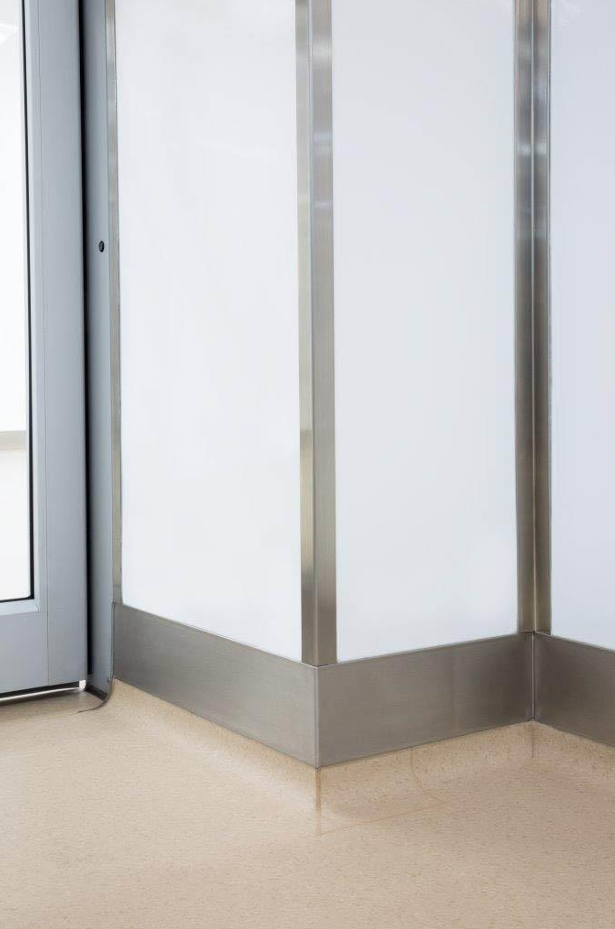
System is comprised of two integrated products:
Stainless Steel Wall Base
Complete waterproof transition from floor to wall when installed per manufacturer's instructions. The base is compatible with a variety of flooring types.
Hygienic Wall Cladding
Industrial-strength, non-fiberglass reinforced panels offer high impact resistance, and are thermally stable to handle heat and humidity fluctuations. Field fabrication is sped up because panels are easily cut and don't produce the harmful dust associated with FRP fabrication.
The system offers tremendous design and material flexibility. Architects and building owners can pair the wall base with the wall panel option that meets their needs, including: Hygienic NRP Wall Cladding, Solid Surface Wall Cladding, or Stainless Steel Wall Panels.
This system has applications in labs, pharmaceutical production, clean rooms, food processing and commercial kitchens, hospital operating rooms, university dining halls, and restaurants.
FLEXIBLE WALL PROTECTION
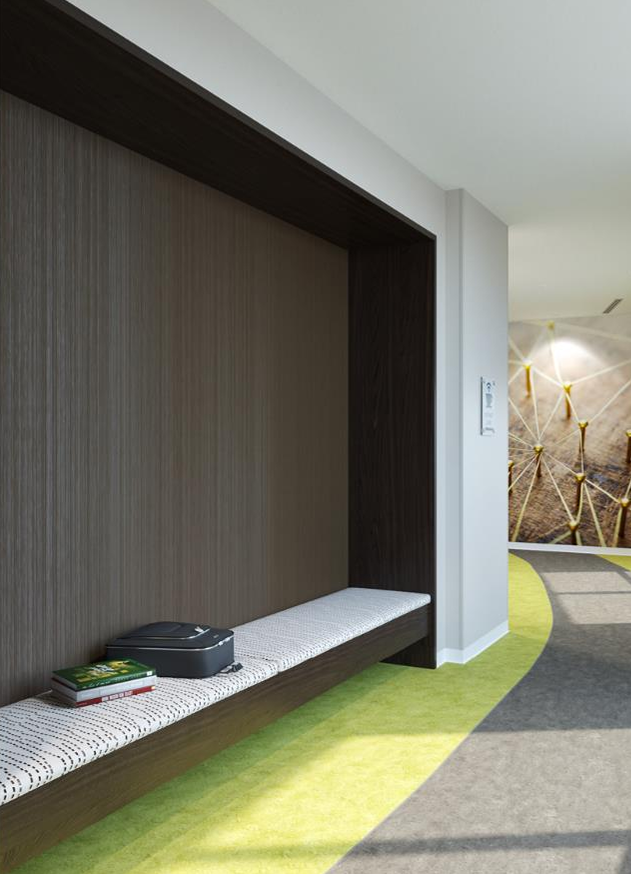
- Surface is non-porous
- Offers the aesthetic of wallcovering with the function and durability of traditional wall protection
- .040 thickness … as thick as rigid products
- Withstands moderate abuse
- Many patterns, textures & colors available
- All patterns are Class A fire rated
- Proper surface preparation and adhesive is critical to prevent mold behind flexible wall cladding.
When tested for use with the EPA's approved list of disinfectants, this flexible wall protection product showed no change on the surface following exposure to the cleaning agents listed:
- Household Bleach (undiluted)
- Isopropyl Alcohol
- Lysol®
- Hydrogen Peroxide 3%
- Clorox® Germicidal Bleach 8.25%
- Spor-Klenz®
Result: Successfully passed test and showed no change to the surface material or color.
STAINLESS STEEL
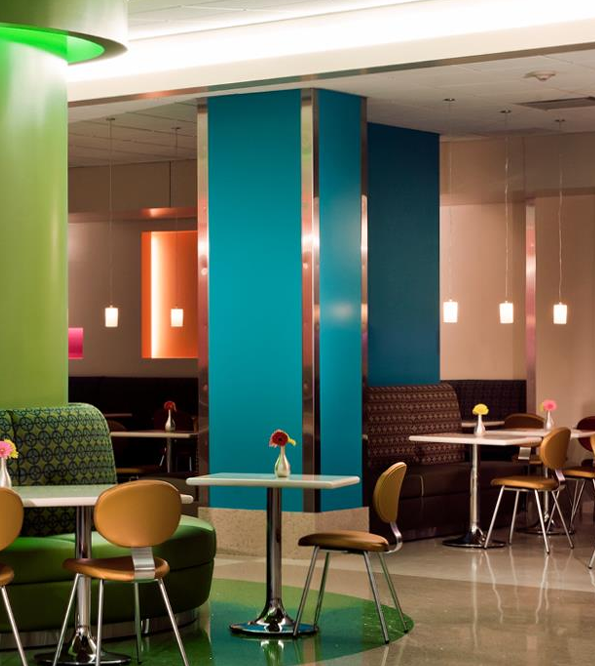
- Easy-to-clean material.
- Withstands heavy abuse
- 304 and 430 stainless conforms to NSF standard for direct food contact
- Mechanical or adhesive installation
- More expensive but has a long life cycle
SOLID SURFACE WALL CLADDING
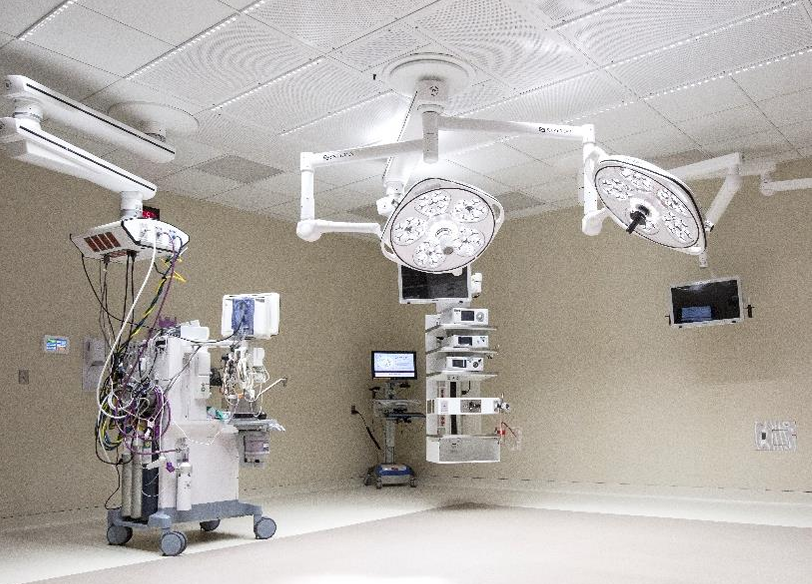
Since solid surface is non-nutritive, it does not promote the growth of mold and mildew, and resists bacterial growth. The inclusion of "active" antimicrobials within the solid surface itself can reduce odor-causing bacteria.
This is an excellent and durable solution for spaces like operating rooms and other sterile environments.
The material benefits of solid surface are:
- Non-porous
- Extremely durable -- long lifecycle
- Many colors and particulate combinations available
Installation Tip
In construction projects – especially major renovation or retrofits – installers may encounter wall conditions that are less then true. Specifying solid surface panels with an s-curve "wavy" edge allows panels to fit together with a flat, flush seam where the wall may fluctuate.
The tight, flush hard seam reduces places where dirt, dust, mold and germs can get trapped. Some solid surface panels are produced in larger-than-standard industry size, which can also reduce the number of seams in a wall run.
SOLID SURFACE SHOWER SURROUNDS
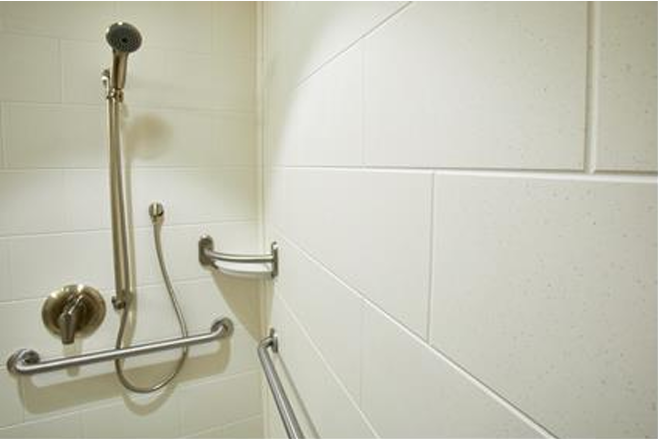
Solid surface is also a great material for shower surrounds and receptors or pans. The same benefits apply:
- Non-nutritive – does not promote the growth of mold and mildew, and resists bacterial growth.
- The inclusion of "active" antimicrobials within the solid surface itself can reduce odor-causing bacteria.
Plus unlike tile, there's no grout to trap bacteria or where mold and mildew can grow.
And, how about adding the look of tile, but with the benefit of less maintenance?
Designs can be routed into the solid surface to mimic the look of tile, but doesn't compromise the material's integrity. Designers have an aesthetic alternative to smooth panels by choosing decorative designs like diamonds, subway tile, basic squares and beadboard.
This grout-less feature and the material properties of solid surface deliver greater moisture resistance and cleanability over time.
SOLID SURFACE SHOWER RECEPTORS / PANS
Receptors or Pans made from solid surface can be poured into squares and rectangles of numerous sizes. The integral non-skid surface helps prevent slips and falls, and ADA edges and ramps can ease the transition from floor to receptor. Drain locations can be set to match existing plumbing, and trench drains are also an option.
Shower bases can be poured and fabricated into an almost unlimited array of custom shapes – L shapes, T shapes, Neo Angles, etc. In addition, factory fabricated shower receptors ensure consistent quality and material performance through rigorous production standards.
The overall long lifecycle is phenomenal … it is extremely durable, will not degrade, and stays looking new for a very long time.
ANTIMICROBIAL FABRICS - SILVER
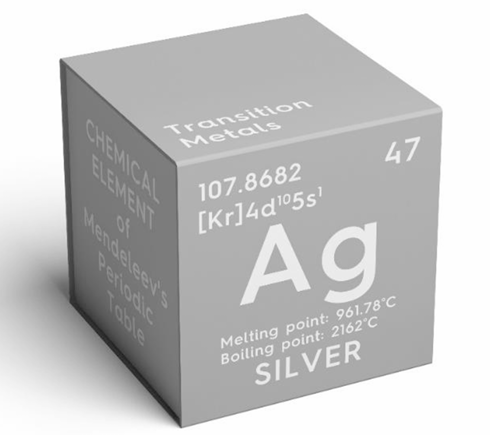
Silver is a natural antimicrobial ingredient that has been used for years by professionals in the field of wound healing, mainly because of its scientifically proven antimicrobial efficacy. Many Americans are first exposed to silver at birth, where silver nitrate eye drops are used to prevent infection. Medicine recognizes silver as a strong contender as an anti-microbial agent.
The prophylactic application of silver, a non-toxic, effective antimicrobial agent, is used especially when the risk of infection exists or is suspected. The active ingredient prevents the growth of a broad spectrum of bacteria and fungi. At the same time, silver is a very skin-friendly and compatible agent, which bacteria rarely build up resistance to.
In a warm, moist environment, silver ions, which are highly "bioreactive" - meaning that they are itching to combine with other substances - bind with proteins inside and outside bacterial cell membranes. This inhibits cell respiration and reproduction. Simply put, silver kills bacteria by removing any microorganisms that "land" on it. Silver works through ionization, as the electron release of the silver has the effect of smothering any microorganisms that contact it. The warmer and moister an environment is, hence where the bacteria like to grow, the more effective the reaction.
Note: A very small percentage of the population may have an allergic reaction to silver, most often indicated by a skin rash. Jewelry and dental fillings are usually the two most prevalent silver contact media. Allergic reactions to silver dental fillings are rare. Fewer than 100 cases have ever been reported, according to the American Dental Association. An allergic reaction to jewelry may actually be a reaction to nickel, which is used in alloys with silver and gold.
ANTIMICROBIAL FABRICS – SILANE-BASED COMPOUNDS
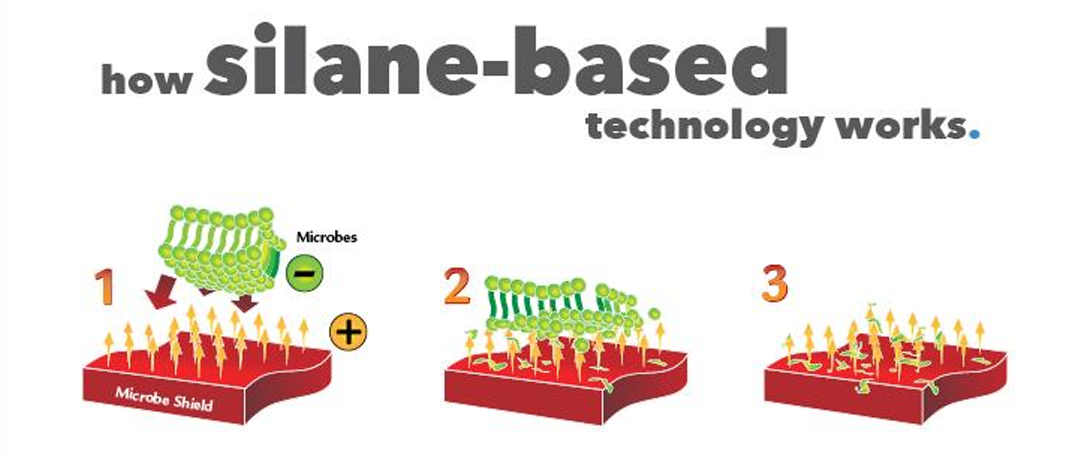
First, silane-based chemistry carries a positively-charged nitrogen molecule. Bacteria cells are negatively charged. This causes the bacteria to be attracted to the silane based chemistry on the surface it's applied to, such as privacy curtain fabric.
Secondly, when the negatively-charged bacteria cell comes into contact with the positively-charged surface, the silane-based technology physically pierces the cell membrane and the positive electrical charge electrocutes the cell completely.
Finally, since nothing is transferred to the now dead cell, the antimicrobial doesn't lose strength and the molecule is ready for the next cell to contact it.
Since it is not consumed and does not dissipate, the antimicrobial compound is not depleted and continues to inhibit microbial growth over time. This means that the antimicrobial will be fully effective as long as the surface remains intact. Since the technology does not dissipate or leach, it cannot be absorbed by the organism - or by humans.
Silane-based fabrics may be wiped clean versus laundered due to high repellency and stain resistance – saving time and costs associated with laundering. And the high repellency of these fabrics makes them a great alternative for shower curtains.
Unlike other fabrics, silane-based fabrics do not require special detergents to maintain its antimicrobial properties. They also needs little to no dry time, much less than a typical fabric.
The case for disposable curtains
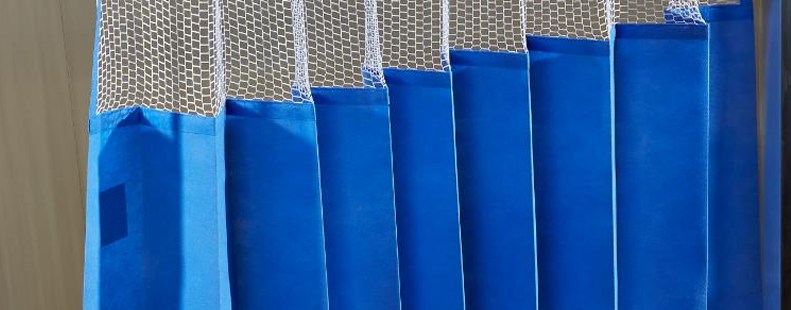
Environmental Services and Maintenance staff at medical facilities and clinics are weighing new options in privacy curtains:
- Switch to Disposables
- Stick with Washable curtains
- Employ some mix of both
Based on the math, disposable privacy curtains over time can cost as much as 70% more than washable curtains. However, disposable curtains may be a better alternative in spaces where frequent change-outs are the norm. In the end, we believe hospitals and other medical facilities will likely employ some mix of both types of privacy curtains.
MOLD-FIGHTING SHOWER CURTAINS
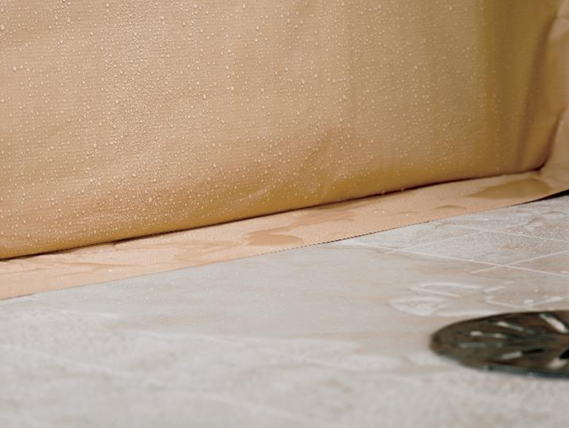
While new designs are incorporating door-less showers or glass doors, many facilities still have shower curtains for privacy. The wise choice of curtain material, again, can be enlisted to help keep mold and mildew in check.
Bio-static shower curtains resist mold and bacteria and are made from durable, multi-purpose vinyl for easy cleaning and low maintenance. ADA models feature a bottom lip and side Velcro® seals to keep water in the shower area, which reduces the risk of slips and falls.
Conclusion
As we wrap up, we hope you’ve gained a good and broader perspective of “the new normal” when it comes to keeping facilities cleaner. Everyone is stepping up their game from architects who will now have to make clean part of their design process, to facility owners and staff who will need to frequently clean with stronger disinfectants. And we’ve shown that there are materials that can stand up to these harsher cleaning routines, and that incorporate active antimicrobials that help keep microbes in check.