Introduction
The cubicle or privacy curtain has been a fixture in clinics, hospitals and skilled-nursing facilities for decades. They serve a critical function in both maintaining patient and resident privacy and comfort, and in adding to a pleasing décor.
This white paper lays out some of the major considerations surrounding the use of cubicle curtains, specifically:
- The Healthier Hospitals Initiative and chemicals of concern as it applies to privacy curtains.
- Factors in employing disposable vs. washable curtains.
- Enhancing patient comfort and healing by employing quieter cubicle curtain track.
HHI, the EPA and Antimicrobials
Formed in 2012, the Healthier Hospitals Initiative (HHI) is a coalition of major health systems and organizations committed to improving sustainability and safety across the healthcare sector. Their goals are focused in 7 main areas:
- Safer Chemicals
- Engaged Leadership
- Healthier Food
- Leaner Energy
- Less Waste
- Construction and Demolition
- Smarter Purchasing
The HHI purpose and goals are laudable in that they follow the main precept set forth by Hippocrates: "First do no harm." And, they have taken this motto beyond the doctor-patient relationship to reducing harm to the environment as well.
For the purposes of this white paper, we are going to focus on the HHI Healthy Interiors goal under Safer Chemicals, and specifically the application of antimicrobials.
Healthy Interiors Goal
Ensure that 30% of the annual volume of furnishings and furniture purchases (based on cost) eliminate the use of formaldehyde, per-fluorinated and poly-fluorinated compounds (PFAs), polyvinyl Chloride (PVC), antimicrobials, and flame retardants.
As for antimicrobials, HHI calls out two particular chemicals, triclosan and triclocarban, which may produce negative impacts on human health.
The HHI guideline goes on to say no other added or built-in chemical antimicrobials are allowed unless they are registered. This refers to the U.S. Environmental Protection Agency (EPA) and the Federal Insecticide, Fungicide, and Rodenticide Act (FIFRA).
That law set up the basic U.S. system of pesticide regulation to protect applicators, consumers and the environment. Antimicrobials – especially those claiming to benefit human health – are considered a pesticide and must go through a rigorous application and review process with the EPA before they are allowed to go on the registered list.
It is important to distinguish that there are a lot of antimicrobials added to products and materials for the sole purpose of preserving the product, or to speed the cleaning or laundering of a product, or both. In this case, these antimicrobials prolong the longevity of the product by protecting it from microbes – odor-causing bacteria, mold, and mildew. They protect the material or product, not humans.
Those antimicrobial agents are exempt from needing EPA registration, because the Agency is concerned with only those antimicrobials and products making claims of efficacy against human pathogens. Any company claiming human-health benefits from an applied antimicrobial yet lacking an EPA registration faces federal litigation and very stiff fines and forfeitures.
One additional point to stress is the HHI interiors guidelines also caution against complacency, meaning no embedded antimicrobial within a product or materials can or should be seen as a substitute for proper cleaning and disinfecting. Think of it this way: The minute a freshly laundered cubicle curtain is hung, it starts collecting microbes – through airborne transmission, through touch and through sprays and splattering. In reality, embedded antimicrobials work in concert with proper cleaning and laundering protocols.
Also worth noting is the Initiative supports the elimination of chemicals used as flame retardants where code permits. In the case of cubicle curtains, flame retardants are a requirement to meet code, but there are friendlier alternatives to traditional additives , which meet GreenScreen Benchmark 3 or 4, that are more acceptable and less harmful.
The Healthier Hospitals Initiative has provided an excellent opportunity for manufacturers and healthcare systems to open dialogs on product and material science and innovation. Such collaboration, we think, would make Hippocrates smile.
We wrap up this section by stating antimicrobial technologies applied to privacy curtain fabrics can play a beneficial role in facility cleaning protocols by allowing wipe down in place, less laundering and faster room turnover upon patient discharge.
Operational options: Washable vs. Disposable Curtains
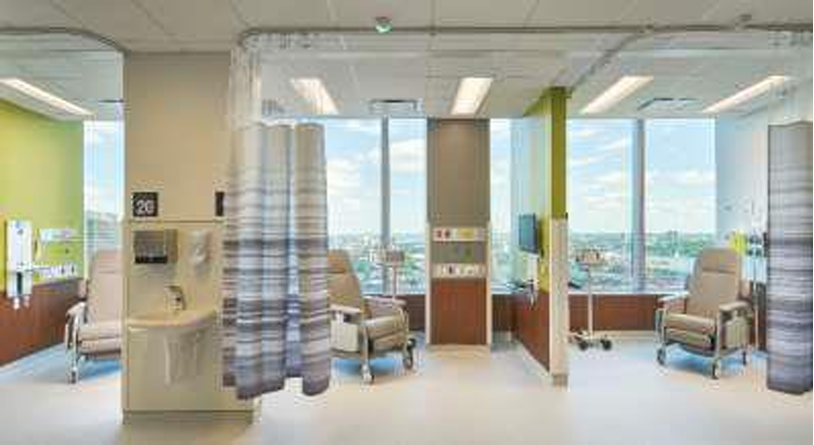
Environmental Services and Maintenance staff at medical facilities and clinics are weighing new options for privacy curtains:
- Switch to Disposables
- Stick with Washable curtains
- Employ some mix of both
As with any decision, there are always pros and cons. So, let's lay out some factors to consider.
1. Long-term Performance
This one is a no-brainer: Washable fabric curtains just last longer. When properly laundered per the manufacturer's instructions, fabric curtains can give years of good service. Specialty fabrics with stain resistance and liquid repellency can extend useful life even further.
2. Antimicrobial Technology
Both washable and disposable curtains can employ antimicrobials to help maintain a clean environment.
3. Décor & Aesthetics
On this one, we give a big plus to washable fabric curtains for two reasons:
- There are literally millions of colorway, pattern and weave options
- Fabric simply has a better feel, called "hand"
Yes, disposable curtains have started to broaden their pattern options, but it will likely take a decade or more for disposables to come close to the array of options washable fabrics offer.
4. Change-out Efficiencies
Both types of curtains can employ snaps and removable panels to speed change-outs. The ability to simply swap out a soiled panel reduces laundering needs for washables and reduces disposable use This ease of changeability also reduces the workload somewhat for medical and maintenance staff.
5. Sustainability
The factors to consider here are:
- Laundering impacts of Washables – energy use in heating water and running equipment, soaps and chemicals used, and waste water release back into waterways or ground water
Versus
- Greater and more-frequent landfill volume with Disposables.
We also point out that smart fabric selection can help reduce laundering costs, and that disposable curtains can be recycled.
6. Cost
Here's the bottom-line question: Which one costs more? To compare, these are our variables:
| Frequency of laundering: | 6 months | Per unit cost of Disposables: | $25.00 |
| Total # of curtains: | 250 | Frequency of Disposable change-outs: | 3 months |
| Per-curtain laundry rate: | $10.00 | # of years to replace fabric curtains: | 7 years |
| Staff hourly rate for change-out: | $28.00 |
Here's what we calculated:
| Fabric | Disposable | |
|---|---|---|
| Curtain purchase cost | $ 56,250 | $ 25,000 |
| Annual laundering cost | $ 5,000 | $ - |
| Staff cost for curtain change | $ 3,500 | $ 7,000 |
| Fabric | Disposable | |
|---|---|---|
| Estimated cost Year One | $ 64,750 | $ 32,000 |
| Estimated cost Subsequent Yrs | $ 8,500 | $ 32,000 |
| Total cost based on life of curtain | $ 115,750 | $ 224,000 |
| Total annual cost per curtain | $ 37 | $ 128 |
Based on the variables, washable curtains cost 70% less per curtain than disposables on an annual basis.
So, are we saying it's game over for disposable curtains? No, not at all. Instead, we think what many facilities will likely do is consider this final factor:
7. Placement
Areas or departments that change curtains frequently – as in multiple times per day – are great candidates for disposables – like an Emergency Department with a higher soiling risk and more-frequent patient and space turnover.
Conversely, washable fabric curtains are a more-logical fit for areas that don't require frequent change-outs. Think inpatient spaces, exam rooms and diagnostic spaces.
Curtain Track, Noise and the Quiet Hospital
Historically, Florence Nightingale is credited with bringing up the issue of noise in 1859, saying “Unnecessary noise, or noise that creates an expectation in the mind, is that which hurts a patient.” And, [It is] “… the most cruel absence of care which can be inflicted either on the sick or well.”
The auditory environment of the 21st century hospital is substantially louder, more complex and more difficult to control than that of Nightingale’s time. An article in the Boston Globe on noise in hospitals reported that noise levels have doubled since the 1960s.
Healthcare organizations and providers are mobilizing to turn down the volume of hospital noise. In a paper entitled Creating a Culture of Safety: Reducing Hospital Noise, Susan Mazer, Ph.D., suggests a multi-disciplinary team approach for tackling noise issues, focusing mainly on patient equipment and alarms. Dr. Mazer stresses that hospitals need to create a “culture of quiet.”
Getting noise reduction “on track”
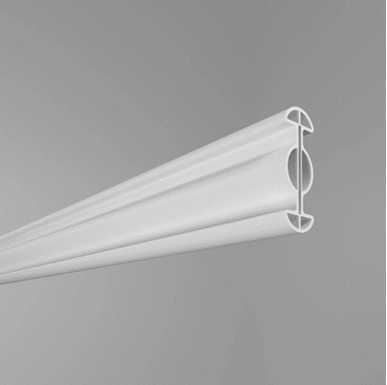
Quiet is one of the keys to patient rest and sleeping that, in turn, helps speed healing. That’s why it’s surprising that cubicle curtain track can contribute to one of the loudest sounds in the patient space.
Through third-party testing, we found traditional aluminum track ranked somewhere between a busy residential road (80 dBA) and the inside of a city bus (90 dBA).
We then tested an innovative bendable cubicle track, it was noticeably quieter, delivering a 20 decibel reduction in noise to 70 dBA … that’s about the level of conversational speech.
We agree with Florence Nightingale and those calling to create a “culture of quiet” in hospitals. That said, there is no silver-bullet solution to reducing noise. It’s obvious a multi-disciplinary approach looking across all aspects of design and material selection is needed. Yet, we take satisfaction knowing that even privacy curtain track can be designed to help bring the “Shhhh” to a patient’s room.
Conclusion
We hope this white paper has shown that cubicle curtains can still play a significant role in patient and resident comfort, facility cleaning, and faster healing outcomes.
When you’re ready to update your privacy curtains and track, we’re ready to help!
From cutting-edge products like Shield by Panaz® antimicrobial curtain fabrics, to our patented Formatrac® Bendable track, to our EZE-Swap® curtain panels, and more, Inpro is your one-stop-shop. Download our full Privacy Systems catalog here.