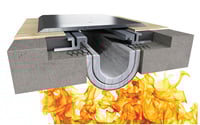
When you think ‘fire protection’ you might think of images like this:
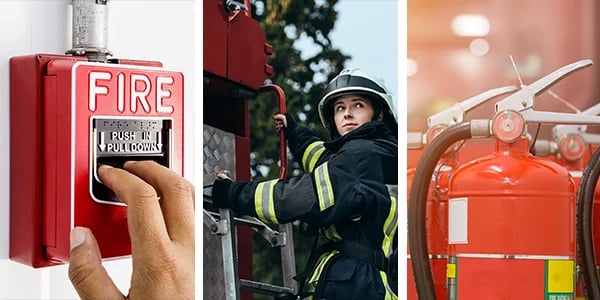
And yes, they are all forms of fire protection…but they are all forms of active fire protection.
Active Fire Protection
Active Fire Protection (AFP) systems work to detect, alert, control and suppress or extinguish a fire. This category of fire protection represents:
- Fire Detectors
- Ionic or photoelectric smoke detectors
- Very early smoke detection apparatus (VESDA)
- Heat or flame detectors
- Optical detectors
- Alarm Systems – most of us have been through a fire drill or two so we’re familiar with the horns, bells, sirens and strobe lights.
- Suppression Systems
- Water sprinklers
- Gaseous suppression systems
- Fire extinguishers
- Fire Fighters!
So with all of the above protection, why do we even need passive fire protection?
Passive Fire Protection
Passive Fire Protection (PFP) compartmentalizes a building to slow the spread of heat, fire and smoke to provide as much time as possible for safe evacuation. A secondary function is to limit damage and preserve the building if possible, but that is a distance second – the main goal is to get everyone out safely.
Passive fire protection systems include:
- Fire and smoke dampers
- Fire doors
- Fire rated floors + walls