Throughout the world, a critical focus has been placed on the cleaning of education buildings and the impact harsh chemicals make on various interior products. As schools shut down and administrators had to contemplate what the “new normal” may look like, many have begun building renovations and interior updates that will support the anti-contamination and cleanliness recommendations of the CDC as well as state and local governments. Without a doubt, proper cleanliness in your school environment will be even more vital than ever to guard student health and maintain or increase enrollment.
While these modifications to education buildings take careful and thoughtful planning, making improvements that will reduce the risk of contamination and cut down on maintenance time CAN be achieved. And here’s the kicker...you can do it without major construction.
Here are 3 Ways to Improve Education Building Interiors and Cleanliness Without Major Construction
1. Do Your Education Building Elevator Interiors Make the Grade?
Like most buildings, accessibility is a critical factor in an education environment. If your building incorporates elevators to help students, faculty, and visitors access various areas of the building, they are likely often used by a large number of people daily.
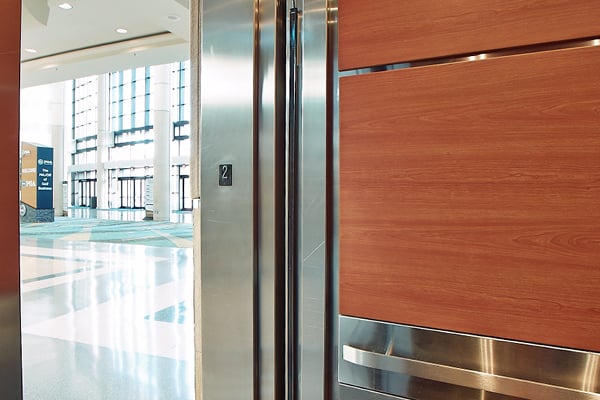
Studies have shown that the bacteria present in elevators is nearly 40 times higher than a public toilet seat.
Even when surface areas are cleaned frequently, the potential for contamination is high. Elevators also have a high probability of sustaining dents, scratches, and damage that make the area look worn.
But, how do you cost-effectively mitigate these risks without having to work on electrical and the structural “bones” of your elevator unit?
Consider solutions that stand up to harsh chemicals and frequent cleaning, minimize maintenance, and withstand constant abuse.
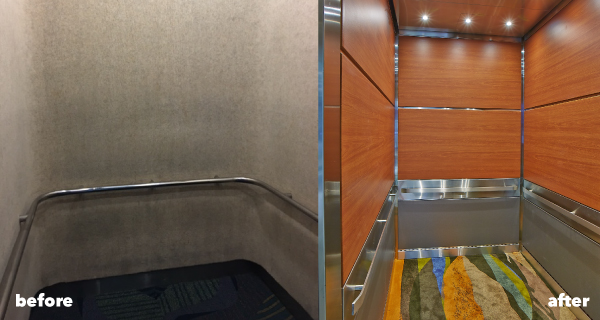
Elevator Cabs: It’s simple to give an elevator cab a lift by selecting interior panel configurations and materials, handrails, and wall guards that meet both your aesthetic and maintenance needs. These products can be customized with the color, finish, and imagery that best suits your space. What’s more, is that many of these interior elements can be installed in as little as one day.
If you’re looking for materials that offer cohesiveness with existing design elements, superior impact resistance, chemical resiliency, and low maintenance - Palladium® Rigid Sheet Wall Protection is a popular choice.
2. Do Your Classrooms and Common Area Spaces Fail to Keep Students Safe?
Like elevator surfaces, students are more likely to encounter bacteria and germs in a computer lab, than in public restrooms. Classroom and dining area surfaces are some of the most pathogen-laden places in a school or on a campus. As large gathering spaces for many students to congregate, there is plenty of touching, sneezing, and coughing (not to mention food residue), making these areas the perfect breeding ground for bacteria.
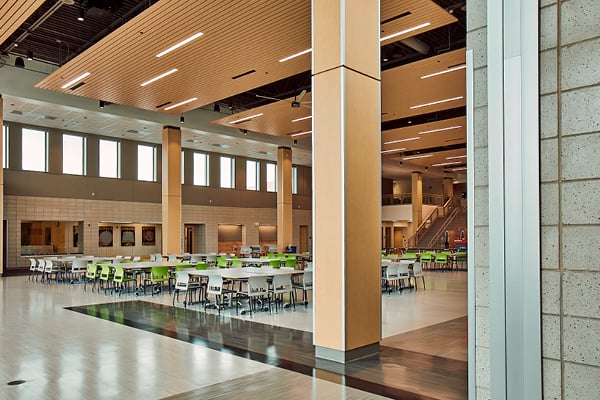
It may seem overwhelming to try to address all the contamination hot zones in classrooms or common areas within your education facilities. Here are a few areas to focus on that don’t require complicated upgrades, will decrease maintenance time, and won’t break the bank.
Windows: Not only do windows serve an important purpose for interior climate control and ventilation, but they are often a focal point in a space. As a common touchpoint in classrooms and other common areas, windows should be upgraded with treatments that are durable and easy to clean and adjust.
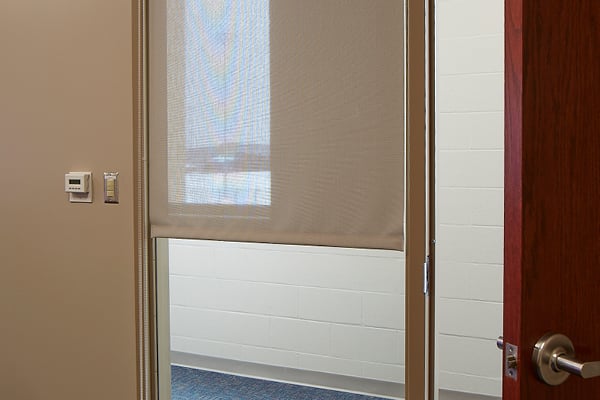
WebbGlideⓇ Shades are long-lasting shades featuring durable fabrics, superior cleanability, and optional privacy track. The spring roller system allows you to adjust the shade with the touch of a finger, and easily set it where you leave it. These shades are also cordless, offering a safer option for areas where cord hazards are of concern and can be custom-printed to carry a theme from room to room.
Doors and Walls: Architectural door and wall protection can serve many purposes. From fending off the dings of backpacks, chairs, and more, to adding biophilic elements that inspire, integrating Inpro’s door and wall protection products is an ideal solution that provides value for years to come.
Palladium Rigid Sheet Protection, Ricochet® Flexible Wall Protection, and Aspex® Printed Wall Protection incorporate beautifully into education environments and pass even the harshest durability and cleanability tests.
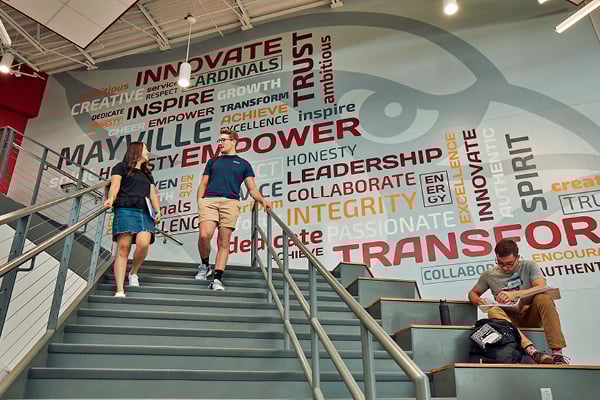
Palladium High Impact Doors combine strength, durability, and cleanability, and offer additional protection from scratches and dents.
These are just a few examples of effective ways to update classroom and common areas in an education environment - learn about more solutions that will take your spaces to the top of the class.
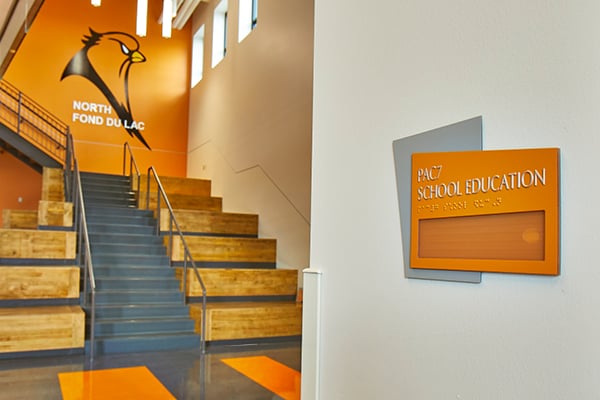
Signage: Interior signage is also a great option when renovating without major construction. A simple sign update can change the entire atmosphere of any building.
Signs are often a touchpoint that is not considered, but students or staff with limited vision depend on them. Make sure when updating your signage to use a material that can withstand harsh cleaning chemicals.
3. Do Your Education Building Restrooms Pass the Cleanliness Test?
Do you know that 68-percent of students say school restrooms that are poorly maintained or unclean show the school doesn’t care about its students, reflects poorly on school administration and leadership, and lowers their overall opinion of the school and campus?
Bathrooms are important school and campus areas where the risk for contamination is high, and interior design modifications can be made with minimal cost and effort. It is possible to keep moisture in check by integrating materials that inhibit the growth of mold, mildew, and odor-causing bacteria.
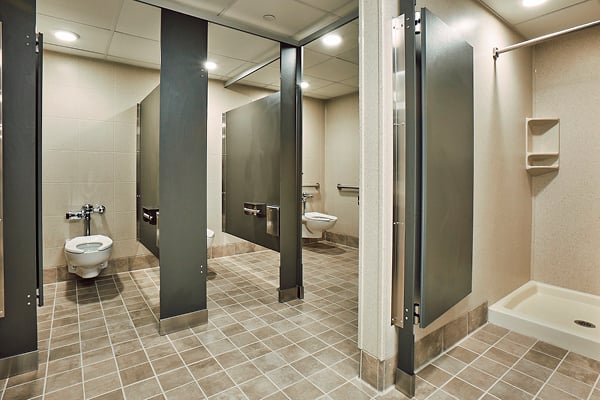
Toilet Partitions and Shower Walls or Bases: From privacy to durability, toilet partitions are frequently touched and highly analyzed by a bathroom’s occupants. In addition, cleanability and the material’s tolerance of harsh chemicals will determine if your partition sustains a clean look for years to come.
Prism™ Solid Surface material is designed to help combat traditional problems associated with restrooms. These partitions, walls, and bases are long-lasting and easy to clean and repair. Prism can be routed to look like tile and is made of antimicrobial material that inhibits the growth of mold, mildew, and odor-causing bacteria.
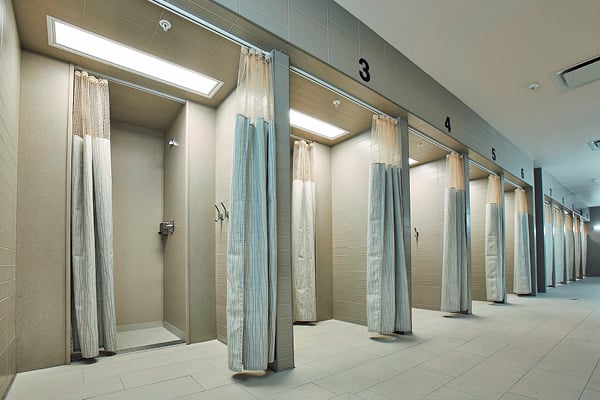
Shower Curtains: Mold issues in dormitories and education facility bathrooms have made headlines in recent years. One of the main problems schools and campuses face is that bathrooms often have poor ventilation and humidity levels become high - especially in shower areas.
Studies have found that if shower curtains are present, the odds of mold or mildew developing are tripled. Yikes! But, with shower curtains, this can be an easy fix when you select the right fabrics.
Shield by Panaz® Fabrics offer antimicrobial attributes (like Prism mentioned above) to prohibit the growth of mold, mildew, and odor-causing bacteria. The fabrics are also liquid repellent, stain-resistant, and tolerant of today’s evolving cleaning protocols.
Interior Products That Stand Up to the Cleaning Demands of Our New Normal
Many schools, colleges, and universities have highly dedicated maintenance and cleaning crews that have had to face the challenge of instituting new cleaning processes and the use of harsher chemicals. Supporting this change to our “new normal” should include incorporating the best interior products made of materials that offer durability and chemical resiliency, in addition to enhancing the look and feel of your spaces. This is an imperative step to not only reduce maintenance time, cost, and the need for major renovations but also ensure the future safety of all who enter your building.
Are you ready to explore solutions to help you build a resilient future for your education environment? Download our checklist: Key Considerations for Designing Education Buildings.
Resources: